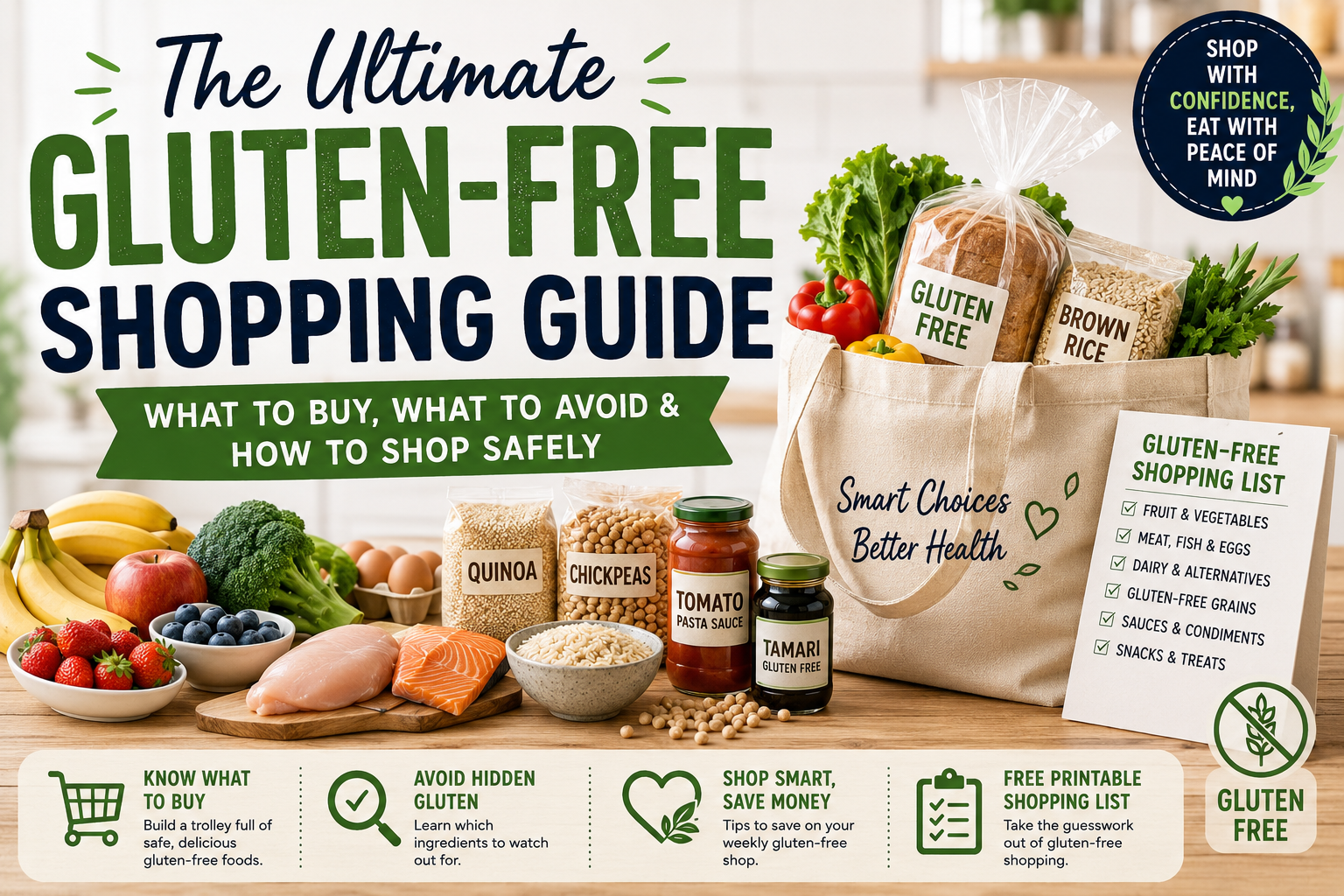
Your first supermarket trip after being diagnosed with coeliac disease can be surprisingly overwhelming.
Suddenly, something as simple as buying breakfast cereal or choosing a sauce can involve turning packets over, reading tiny ingredient lists and wondering whether unfamiliar ingredients are safe.
You might find yourself asking:
Can I eat this?
Does this contain gluten?
What does “may contain” mean?
Is wheat free the same as gluten free?
Do I need to buy everything from the gluten-free aisle?
If that sounds familiar, you’re not alone.
Learning how to shop gluten free takes a little time, but it becomes much easier once you know what to look for.
And here’s some good news: you don’t need to replace everything you eat with expensive specialty gluten-free products.
Fruit, vegetables, plain meat, fish, eggs, rice, potatoes, legumes and many dairy products are naturally gluten free.
The trick is knowing which foods you can confidently put in your trolley, which ones require a closer look at the label, and which ingredients you need to avoid.
This gluten free shopping guide will walk you through the supermarket section by section so you can shop with more confidence.
What’s in This Gluten-Free Shopping Guide?
We’ll cover:
- Foods that are naturally gluten free
- Gluten-containing foods to avoid
- Foods you should always check before buying
- How to read food labels
- Gluten-free alternatives worth buying
- How to stock a gluten-free pantry
- Gluten-free breakfast ideas
- Snacks and lunchbox foods
- Sauces and condiments
- Frozen and convenience foods
- Budget-friendly shopping tips
- Cross-contamination
- A printable gluten-free grocery list
Let’s start with the easiest part of your shopping trip: foods that are naturally gluten free.
What Does Gluten Free Actually Mean?
Gluten is a group of proteins found in wheat, barley and rye.
For people with coeliac disease, eating gluten causes an immune reaction that damages the lining of the small intestine.
That’s why someone with coeliac disease needs to follow a strict gluten-free diet rather than simply reducing the amount of gluten they eat.
Obvious sources of gluten include:
- Regular bread
- Pasta
- Cakes
- Biscuits
- Pastries
- Crackers
- Wheat-based breakfast cereals
- Regular pizza bases
- Many beers
But gluten can also appear in less obvious foods, including sauces, seasonings, stock, processed meats and confectionery.
That’s why learning how to read labels is such an important part of gluten-free shopping.
Start With Naturally Gluten-Free Foods
One of the easiest ways to make gluten-free shopping less stressful is to start with foods that don’t normally contain gluten in the first place.
These foods can form the foundation of your diet.
Fruit
Fresh, unprocessed fruit is naturally gluten free.
Fill your trolley with whatever is affordable, in season and available where you live.
Good options include:
- Apples
- Bananas
- Oranges
- Mandarins
- Kiwifruit
- Strawberries
- Blueberries
- Raspberries
- Grapes
- Pears
- Peaches
- Nectarines
- Plums
- Pineapple
- Mango
- Watermelon
- Rockmelon
- Lemons
- Limes
- Avocados
Frozen fruit without added ingredients is also generally naturally gluten free.
Be more careful with processed fruit products such as flavoured fruit cups, pie fillings and desserts because additional ingredients may have been added.
Vegetables
Fresh vegetables are naturally gluten free too.
Some easy staples include:
- Potatoes
- Kumara/sweet potatoes
- Carrots
- Pumpkin
- Broccoli
- Cauliflower
- Spinach
- Lettuce
- Cabbage
- Tomatoes
- Capsicum/peppers
- Courgettes/zucchini
- Mushrooms
- Green beans
- Peas
- Corn
- Onions
- Garlic
Plain frozen vegetables can also be an excellent option, particularly when fresh produce is expensive.
Check the ingredients on frozen vegetables that come with sauces, seasoning or crumb coatings.
Fresh Meat and Poultry
Plain, unprocessed meat is naturally gluten free.
This includes:
- Beef
- Chicken
- Lamb
- Pork
- Turkey
The important word here is plain.
Once meat has been processed, marinated, seasoned or crumbed, you need to check the ingredients.
Be especially careful with:
- Sausages
- Burger patties
- Meatballs
- Chicken nuggets
- Schnitzel
- Marinated chicken
- Seasoned meat
- Deli meats
These products may contain breadcrumbs, wheat-based fillers, sauces or seasoning mixes.
Fish and Seafood
Plain fresh or frozen fish and seafood are naturally gluten free.
Examples include:
- Fresh fish fillets
- Prawns
- Mussels
- Scallops
- Tuna
- Salmon
Again, processing changes things.
Check the label on:
- Crumbed fish
- Battered fish
- Fish fingers
- Seafood sticks
- Marinated seafood
- Flavoured canned fish
Plain canned tuna or salmon may be suitable, but always check the individual product’s ingredients.
Eggs
Plain eggs are naturally gluten free and can be a useful, affordable protein source for many households.
Boiled, scrambled, poached or fried eggs can all be gluten free as long as the other ingredients and cooking surfaces are safe.
If you’re ordering eggs at a café, remember that cross-contact may occur on grills or with shared utensils, so people with coeliac disease may need to ask about preparation.
Milk and Dairy Products
Many plain dairy foods are naturally gluten free.
These commonly include:
- Plain milk
- Butter
- Cream
- Plain cheese
- Plain natural yoghurt
However, don’t assume all dairy products are safe.
Check the label on:
- Flavoured yoghurt
- Dairy desserts
- Custards
- Flavoured milk
- Milkshakes
- Processed cheese products
- Ice cream
Products containing biscuit pieces, malt, cookie crumbs or other added ingredients may contain gluten.
Rice
Rice is naturally gluten free and is one of the easiest pantry staples for a gluten-free household.
Options include:
- White rice
- Brown rice
- Basmati rice
- Jasmine rice
- Arborio rice
Plain rice is different from flavoured rice packets.
Pre-seasoned or instant rice products may contain stock powders, sauces or seasonings that need to be checked.
Potatoes
Potatoes are naturally gluten free.
You don’t need to buy a special “gluten-free potato.”
Baked potatoes, mashed potatoes, boiled potatoes and homemade roast potatoes can all be excellent gluten-free options.
However, processed potato products require more attention.
Check:
- Frozen chips
- Hash browns
- Potato wedges
- Potato gems/tater tots
- Instant mashed potato
- Flavoured potato products
Ingredients and manufacturing methods vary between brands.
Beans, Lentils and Legumes
Legumes are another useful naturally gluten-free food group.
Examples include:
- Chickpeas
- Kidney beans
- Black beans
- Cannellini beans
- Lentils
- Split peas
Plain dried legumes are naturally gluten free.
For canned varieties, check the ingredients for added sauces or flavourings.
Nuts and Seeds
Plain nuts and seeds are naturally gluten free.
Try:
- Almonds
- Cashews
- Walnuts
- Peanuts
- Pumpkin seeds
- Sunflower seeds
- Chia seeds
- Flaxseeds/linseeds
Flavoured, coated or seasoned nuts require a label check because the coating or seasoning may contain gluten.
Naturally Gluten-Free Grains and Alternatives
Wheat isn’t your only option.
Naturally gluten-free alternatives include:
- Rice
- Corn/maize
- Quinoa
- Buckwheat
- Millet
- Sorghum
- Amaranth
Despite its confusing name, buckwheat isn’t wheat and is naturally gluten free.
However, naturally gluten-free grains can be contaminated during processing, so products such as flours and grain mixes should be checked carefully and gluten-free-labelled versions may be preferable for someone with coeliac disease.
The Three Shopping Categories to Remember
Instead of trying to memorise hundreds of individual foods, divide products into three simple categories.
🟢 GREEN: Naturally Gluten Free
These are generally your easiest choices:
- Fruit
- Vegetables
- Plain meat
- Plain fish
- Eggs
- Plain dairy
- Rice
- Potatoes
- Beans
- Lentils
- Nuts and seeds
🟠 ORANGE: Check the Label
These aren’t automatically unsafe, but you need to investigate:
- Sausages
- Deli meats
- Sauces
- Stock
- Seasonings
- Potato chips
- Breakfast cereal
- Chocolate
- Ice cream
- Flavoured yoghurt
- Frozen meals
- Processed snacks
🔴 RED: Contains Gluten Unless Specifically Made Gluten Free
Common examples include:
- Regular bread
- Regular pasta
- Wheat flour
- Regular cakes
- Biscuits
- Pastries
- Regular pizza
- Wheat crackers
- Barley
- Rye
- Malt-based products
This simple green, orange and red system can make your first few gluten-free shopping trips much less intimidating.
Don’t Shop Only in the Gluten-Free Aisle
One of the biggest mistakes beginners make is assuming everything they eat now needs to come from the dedicated gluten-free section.
It doesn’t.
Specialty gluten-free products can be incredibly useful for replacing foods such as:
- Bread
- Pasta
- Wraps
- Crackers
- Flour
- Biscuits
But they can also be more expensive.
A trolley filled with naturally gluten-free foods such as potatoes, rice, vegetables, fruit, meat, legumes and dairy can often be cheaper and provide plenty of variety.
Use the gluten-free aisle for the products you genuinely need rather than treating it as your entire supermarket.
Before You Put a Packaged Food in Your Trolley…
Get into the habit of asking three questions:
1. Is it labelled gluten free?
If yes, that’s a useful first sign.
2. What does the ingredients list say?
Look for wheat, barley, rye, malt and other gluten-containing ingredients.
3. Is there a cross-contact warning?
Check for precautionary statements about wheat or gluten and follow the food-labelling guidance relevant to your country and your healthcare team’s advice.
It may feel painfully slow at first.
After you’ve found a collection of trusted products, however, your weekly shopping trip becomes much faster.
Coming Up in Part 2
In Part 2, we’ll walk through the parts of the supermarket where hidden gluten becomes much more common, including:
- Bread and wraps
- Pasta and noodles
- Breakfast cereals
- Oats
- Baking products
- Sauces
- Soy sauce
- Stock cubes
- Seasonings
- Snacks
- Chocolate and lollies
- Frozen foods
- Processed meats
- Drinks
Gluten-Free Shopping: The Packaged Foods You Need to Check Carefully
Once you’ve filled your trolley with naturally gluten-free foods, the next part of your shopping trip requires a little more attention.
Packaged and processed foods are where gluten can become much less obvious.
A product doesn’t need to look like bread to contain gluten. Wheat, barley, rye and their derivatives can appear in sauces, seasonings, cereals, processed meats, snacks and convenience foods.
Let’s walk through the supermarket section by section.
Gluten-Free Bread
Regular bread is made primarily from wheat flour, so you’ll need to choose bread specifically made to be gluten free.
Depending on where you live, you may find gluten-free:
- White bread
- Wholegrain-style bread
- Seeded bread
- Bread rolls
- Burger buns
- Hot dog buns
- Fruit bread
- Sourdough-style bread
Some gluten-free breads are sold fresh, while others are kept in the freezer section.
Money-Saving Tip
Gluten-free bread can be expensive. If you don’t eat much of it, freeze the loaf and remove individual slices when needed.
And remember: if your household also uses regular bread, a separate toaster or another suitable method of preventing crumb cross-contact is important for someone with coeliac disease.
Wraps and Tortillas
Regular wraps commonly contain wheat flour.
Gluten-free alternatives may be made from:
- Corn
- Rice flour
- Tapioca
- Chickpea flour
- Other gluten-free flour blends
Don’t assume every corn tortilla is automatically suitable for someone with coeliac disease. Check the ingredients and packaging because recipes and manufacturing conditions vary.
Gluten-Free Pasta
Fortunately, gluten-free pasta has improved enormously.
You’ll now find pasta made from:
- Corn
- Rice
- Lentils
- Chickpeas
- Quinoa
- Peas
- Gluten-free flour blends
Different varieties have different textures, so it may take a few tries to find your favourite.
Kitchen Reminder
If your household cooks both regular and gluten-free pasta, don’t drain gluten-free pasta through a colander containing residue from regular pasta.
Noodles
Noodles can be particularly confusing.
Traditional wheat noodles contain gluten, including many:
- Instant noodles
- Egg noodles
- Ramen noodles
- Udon noodles
Rice noodles can be a useful alternative, but you should still check the packaging.
Also check the flavour sachets in instant noodle products. A gluten-free noodle doesn’t automatically mean the accompanying seasoning is gluten free.
Breakfast Cereals
Breakfast cereal is one of the areas where label reading becomes especially important.
Many cereals contain:
- Wheat
- Barley
- Barley malt
- Malt extract
- Rye
This can include cereals that don’t immediately look wheat-based.
Look for products specifically identified as suitable for a gluten-free diet.
Possible options include gluten-free versions of:
- Corn flakes
- Rice cereals
- Muesli
- Granola
- Puffed cereals
Always check the individual product.
What About Oats?
Oats are more complicated than many other foods.
Standard oats can be contaminated with wheat, barley or rye during growing, harvesting and processing. There are also differences between countries in how oats are treated under gluten-free labelling rules.
Additionally, some people with coeliac disease react to avenin, a protein naturally found in oats.
Because of this, don’t simply assume that ordinary oats are suitable after a coeliac disease diagnosis.
Discuss oats with your doctor or dietitian and follow the recommendations and labelling rules for the country where you live.
Gluten-Free Flour and Baking Ingredients
If you enjoy baking, you’ll probably want to replace wheat flour.
There are many alternatives, including:
- Rice flour
- Cornflour/cornstarch
- Tapioca starch
- Potato starch
- Buckwheat flour
- Almond flour
- Coconut flour
- Chickpea flour
- Gluten-free all-purpose flour blends
Gluten-free baking behaves differently from traditional baking, so using a premixed gluten-free flour blend can be easier when you’re starting out.
Check Your Other Baking Ingredients Too
Don’t stop at the flour.
Read labels on:
- Baking powder
- Icing mixtures
- Sprinkles
- Chocolate chips
- Cake decorations
- Flavourings
- Custard powder
- Dessert mixes
Sauces: One of the Biggest Hidden Gluten Areas
Sauces are where many beginners get caught out.
A sauce may contain gluten because of:
- Wheat flour used for thickening
- Soy sauce
- Malt ingredients
- Seasoning mixes
Products worth checking every time include:
- Tomato sauce/ketchup
- Barbecue sauce
- Sweet chilli sauce
- Teriyaki sauce
- Oyster sauce
- Stir-fry sauces
- Pasta sauces
- Curry sauces
- Worcestershire sauce
- Salad dressings
Many gluten-free alternatives are available, but never assume that every brand uses the same recipe.
Soy Sauce
Soy sauce deserves special attention.
Despite being called soy sauce, many traditional versions are brewed using wheat.
Look for a product clearly identified as gluten free. Some types of tamari may be suitable, but tamari isn’t automatically gluten free, so the label still matters.
This is also something to remember when eating Asian-style dishes away from home, because soy sauce may be used in marinades, stir-fries and dipping sauces.
Stock Cubes and Stock Powders
Stock is used in so many recipes that it’s easy to forget about it.
Check:
- Chicken stock
- Beef stock
- Vegetable stock
- Stock cubes
- Stock powders
- Liquid stocks
- Gravy stocks
Some are gluten free and others aren’t.
Once you find a suitable brand, keeping it as a pantry staple makes cooking much easier.
Gravy
Traditional gravy is often thickened with wheat flour.
Packet gravy mixes may also contain gluten.
Fortunately, gluten-free gravy products are widely available, or you can make your own using a suitable gluten-free thickener.
If you’re eating away from home, don’t assume gravy is safe just because the meat underneath it is gluten free.
Herbs, Spices and Seasonings
Plain individual herbs and spices are generally naturally gluten free.
However, seasoning blends require more attention.
Check products such as:
- Taco seasoning
- Chicken seasoning
- BBQ rubs
- Curry mixes
- Garlic seasoning
- Meat rubs
- Flavoured salts
- Seasoning sachets
It’s the additional ingredients in a blend that can cause problems.
Sausages
Sausages are a classic example of a food that may or may not be gluten free.
Depending on the recipe, they can contain:
- Breadcrumbs
- Wheat-based fillers
- Seasoning mixes
- Sauces
Don’t assume expensive butcher sausages are automatically safe either.
Ask the butcher or check the package.
Burger Patties and Meatballs
Plain minced meat is naturally gluten free.
Pre-made burger patties and meatballs are different.
They may contain breadcrumbs or other binders and seasonings.
If you’re unsure, making your own with plain mince and gluten-free ingredients gives you complete control over what goes into them.
Deli Meat
Ham, salami and sliced meats can vary considerably between products.
Check the ingredients of packaged varieties.
At a deli counter, there’s an additional issue: cross-contact.
The same slicer or utensils may be used for multiple products.
If you have coeliac disease, ask staff about both the ingredients and how the product is handled.
Potato Chips and Crisps
Potatoes are naturally gluten free.
Potato chips aren’t automatically gluten free.
Flavouring powders can contain ingredients that require checking, and manufacturing processes vary between products.
Pay particular attention to flavoured varieties such as:
- Chicken
- Barbecue
- Cheese
- Salt and vinegar
- Sour cream flavours
The answer isn’t to avoid every flavoured chip—it’s to read the individual label.
Crackers and Snack Foods
Regular crackers usually contain wheat flour, but there are many gluten-free alternatives made from:
- Rice
- Corn
- Seeds
- Legumes
- Gluten-free flour blends
Also check:
- Rice crackers
- Corn chips
- Popcorn
- Pretzels
- Snack mixes
- Protein bars
- Muesli bars
Even foods primarily made from rice or corn can contain gluten-containing flavourings or other ingredients.
Chocolate and Lollies
Some confectionery is gluten free, while other products contain very obvious gluten ingredients.
Look carefully at products containing:
- Biscuit pieces
- Wafers
- Cookie pieces
- Malt
- Pretzels
- Crisped cereal
Liquorice commonly contains wheat and is one confectionery product people often don’t expect to contain gluten.
Seasonal products can also have different ingredients from a brand’s regular range, so check Easter, Christmas and novelty confectionery individually.
Ice Cream and Frozen Desserts
Plain ice cream may be suitable, depending on the product.
Flavours containing:
- Cookies
- Brownies
- Cheesecake
- Biscuit pieces
- Waffle cone
- Malt
are obvious products to investigate carefully.
At an ice cream shop, even a gluten-free flavour can be exposed to crumbs when the same scoop is moved between containers.
Frozen Chips
This is another product where “it’s just potato” isn’t always a safe assumption.
Check the ingredients on:
- Straight-cut chips
- Fries
- Wedges
- Curly fries
- Hash browns
- Potato gems/tater tots
Some products have coatings or seasonings.
When eating out, also ask whether chips are cooked in the same fryer as battered or crumbed foods.
Frozen Meals
Frozen meals can be convenient, but they often contain sauces, thickeners and seasonings.
Don’t judge the product by the main ingredients.
For example, a meal that appears to be simply chicken, vegetables and rice could still contain gluten in its sauce.
Look for clearly labelled gluten-free meals and read the full ingredients list.
Soup
Homemade soup made from suitable ingredients can be an easy gluten-free meal.
Canned, packet and refrigerated soups need to be checked.
Potential sources of gluten include:
- Wheat flour
- Barley
- Noodles
- Stock
- Thickeners
- Seasoning
Even a simple-looking tomato or pumpkin soup isn’t automatically gluten free.
Drinks
Many everyday drinks are naturally gluten free, but there are exceptions.
Plain:
- Water
- Milk
- Tea
- Coffee
are straightforward choices when nothing containing gluten has been added.
Check more carefully:
- Malted drinks
- Hot chocolate
- Flavoured coffee mixes
- Protein shakes
- Meal replacement drinks
- Premixed beverages
Beer and Alcohol
Traditional beer is usually made from barley and contains gluten.
Gluten-free beers are available, but check that the product is actually labelled appropriately for your needs rather than assuming “low gluten” and “gluten free” mean the same thing.
Wine and many distilled spirits don’t contain gluten ingredients in their basic form, but flavoured and premixed drinks can contain additional ingredients that require checking.
Your Gluten-Free Trolley So Far
By this point, a beginner-friendly shopping trolley could contain:
Fresh Foods
✓ Fruit
✓ Vegetables
✓ Plain meat
✓ Fish
✓ Eggs
✓ Plain dairy
Pantry Staples
✓ Rice
✓ Potatoes
✓ Beans
✓ Lentils
✓ Gluten-free pasta
✓ Gluten-free flour
✓ Suitable stock
✓ Gluten-free sauces
Breakfast
✓ Suitable gluten-free cereal
✓ Yoghurt
✓ Fruit
✓ Gluten-free bread
Snacks
✓ Fruit
✓ Nuts
✓ Suitable potato chips
✓ Gluten-free crackers
✓ Suitable chocolate
You don’t need to buy all of these at once.
Start by replacing the foods you use most frequently and gradually build a gluten-free pantry that suits your normal way of eating.
Don’t Assume “Gluten Free” Means Healthy
A gluten-free label tells you something about gluten—it doesn’t tell you everything about the nutritional quality of a product.
Gluten-free:
- Biscuits
- Cakes
- Chocolate
- Chips
- Desserts
can still contain plenty of sugar, saturated fat or salt.
There’s nothing wrong with enjoying these foods, but they don’t need to become the foundation of your diet simply because they’re gluten free.
Fruit, vegetables, legumes, plain proteins, dairy and naturally gluten-free carbohydrates can make up much of your everyday shopping.
Don’t Replace Your Entire Kitchen in One Shopping Trip
A new diagnosis can make you feel like you need to throw everything away and spend hundreds of dollars replacing it.
You don’t.
Start with the products that genuinely need replacing.
For example:
Replace: regular pasta → gluten-free pasta.
Replace: regular bread → gluten-free bread.
Keep: fresh fruit.
Keep: vegetables.
Keep: plain meat.
Check: sauces.
Check: stock.
Check: spices and seasonings.
Working through your kitchen one category at a time is much less stressful—and much cheaper.
Coming Up in Part 3
In the final part of our Ultimate Gluten-Free Shopping Guide, we’ll create the really useful section readers can bookmark or save:
The Complete Gluten-Free Grocery List.
We’ll also cover:
- A beginner’s gluten-free pantry
- Fridge and freezer essentials
- Budget-friendly gluten-free shopping
- How to avoid paying the “gluten-free premium”
- Meal planning
- Shopping with children
- Cross-contamination
- Frequently asked questions
- A printable-style shopping checklist
- Trusted coeliac resources
- Final takeaways
The Complete Gluten-Free Grocery List
By now, you know which foods are naturally gluten free and which packaged products need more careful checking.
This final section brings everything together into a practical shopping list you can use as a starting point.
You don’t need to buy everything on this list. Think of it as a guide you can adapt to your budget, lifestyle and favourite meals.
Fresh Produce
Fresh fruit and vegetables are some of the easiest foods to shop for because they are naturally gluten free.
Fruit
- Apples
- Bananas
- Oranges
- Mandarins
- Kiwifruit
- Grapes
- Berries
- Pears
- Peaches
- Nectarines
- Plums
- Pineapple
- Mango
- Melons
- Lemons
- Limes
- Avocados
Vegetables
- Potatoes
- Kumara/sweet potato
- Carrots
- Pumpkin
- Broccoli
- Cauliflower
- Spinach
- Lettuce
- Cabbage
- Tomatoes
- Capsicum/peppers
- Courgettes/zucchini
- Green beans
- Peas
- Corn
- Onions
- Garlic
- Mushrooms
Meat, Fish and Protein
Choose plain, unprocessed versions whenever possible.
Good Options
- Beef
- Chicken
- Lamb
- Pork
- Turkey
- Fresh fish
- Prawns
- Mussels
- Eggs
- Beans
- Lentils
- Chickpeas
Check Before Buying
- Sausages
- Burger patties
- Meatballs
- Deli meats
- Marinated meat
- Crumbed chicken
- Fish fingers
- Seasoned meat
Dairy and Chilled Foods
Many plain dairy products are naturally gluten free.
Usually Straightforward
- Milk
- Butter
- Cream
- Plain yoghurt
- Plain cheese
- Cottage cheese
Check Carefully
- Flavoured yoghurt
- Custard
- Dairy desserts
- Processed cheese
- Flavoured milk
- Ice cream
Gluten-Free Pantry Staples
A well-stocked pantry makes gluten-free cooking much easier.
Useful staples include:
- Rice
- Gluten-free pasta
- Quinoa
- Buckwheat
- Cornmeal
- Polenta
- Lentils
- Chickpeas
- Beans
- Gluten-free flour
- Cornflour/cornstarch
- Tapioca starch
- Potato starch
- Gluten-free breadcrumbs
- Nuts
- Seeds
- Dried fruit
Sauces and Flavourings
This is one section where reading labels is especially important.
Look for suitable gluten-free versions of:
- Soy sauce or tamari
- Tomato sauce/ketchup
- BBQ sauce
- Sweet chilli sauce
- Worcestershire sauce
- Teriyaki sauce
- Oyster sauce
- Curry sauces
- Stir-fry sauces
- Salad dressings
- Stock
- Gravy
- Marinades
Breakfast Foods
Your gluten-free breakfast options can include:
- Gluten-free bread
- Suitable gluten-free cereal
- Yoghurt
- Fresh fruit
- Eggs
- Smoothies
- Gluten-free granola
- Rice cakes
Oats require extra care because advice and labelling rules vary by country, so follow the recommendations of your healthcare team.
Snack Foods
Easy snack ideas include:
- Fresh fruit
- Nuts
- Seeds
- Gluten-free crackers
- Rice cakes
- Suitable popcorn
- Suitable potato chips
- Yoghurt
- Cheese
- Hummus
- Gluten-free snack bars
Again, processed snacks need to be checked individually.
Freezer Essentials
Keeping a few safe frozen options on hand can make busy days much easier.
Consider:
- Plain frozen vegetables
- Frozen fruit
- Gluten-free bread
- Gluten-free pizza bases
- Gluten-free frozen meals
- Suitable frozen chips
- Gluten-free crumbed chicken or fish
- Homemade gluten-free leftovers
Label homemade meals clearly before freezing so they’re easy to identify later.
How to Build a Beginner Gluten-Free Pantry
If you’re newly diagnosed, don’t try to replace everything at once.
Start with the foods you use most often.
A simple beginner pantry might include:
- Rice
- Gluten-free pasta
- Gluten-free bread
- Gluten-free flour
- Cornflour
- Suitable stock
- Gluten-free soy sauce
- Tomato sauce
- Canned beans
- Lentils
- Tinned tomatoes
- Herbs
- Spices
- Nuts
- Seeds
From there, you can slowly add products as you discover what you actually enjoy eating.
How to Save Money on Gluten-Free Shopping
One of the biggest frustrations with a gluten-free diet is the cost of specialty products.
Gluten-free bread, biscuits, cereal and convenience foods can be significantly more expensive than regular versions.
Fortunately, there are ways to keep costs down.
Buy Naturally Gluten-Free Foods
Rice, potatoes, fruit, vegetables, eggs, beans and lentils are often much cheaper than specialty gluten-free products.
Compare Unit Prices
A larger packet isn’t always cheaper.
Check the price per 100g or kilogram when comparing brands.
Use Supermarket Own Brands
Many supermarkets now sell affordable gluten-free products under their own labels.
Always check the ingredients, but these can sometimes be much cheaper than specialist brands.
Freeze Bread
Because gluten-free bread can be expensive and may spoil quickly, freezing it can reduce waste.
Cook From Scratch
Simple meals such as:
- Roast chicken and vegetables
- Stir-fried vegetables with rice
- Baked potatoes
- Homemade soup
- Chilli with rice
- Grilled meat and salad
can be cheaper than relying on gluten-free convenience foods.
Buy in Bulk When It Makes Sense
Rice, beans, lentils, nuts and some gluten-free flours can be cheaper in larger quantities.
Just make sure you’ll actually use them before they expire.
Plan Meals Before You Shop
Meal planning is one of the easiest ways to reduce both stress and food waste.
Before shopping, choose several meals for the week and write down the ingredients you need.
For example:
Monday
Chicken, roast potatoes and vegetables
Tuesday
Gluten-free pasta with tomato sauce
Wednesday
Beef stir-fry with rice
Thursday
Baked potatoes with cheese and salad
Friday
Homemade gluten-free pizza
Once you know what you’re cooking, it’s much easier to avoid impulse purchases.
Shopping With Children
If a child in your family has coeliac disease, shopping can become a great opportunity to teach them how to recognise safe foods.
As they get older, encourage them to:
- Look for gluten-free labels.
- Recognise wheat, barley and rye.
- Ask questions.
- Understand why food shouldn’t be shared without checking first.
Giving children age-appropriate knowledge can help them become confident and independent as they grow.
Don’t Forget Cross-Contamination
Buying gluten-free food is only part of staying safe.
The food must also remain gluten free once it reaches your kitchen.
Common household risks include:
- Shared toasters
- Crumb-contaminated butter
- Shared chopping boards
- Colanders
- Wooden utensils
- Dirty benches
- Shared fryers
If you’re unsure how to manage this, read our full guide:
How to Avoid Gluten Cross-Contamination with Coeliac Disease
A Simple Shopping Routine
If supermarket shopping still feels overwhelming, use this simple routine:
Step 1
Start with naturally gluten-free foods.
Step 2
Choose the packaged staples you need.
Step 3
Read the full ingredients list.
Step 4
Check allergen and precautionary statements.
Step 5
Choose a safer alternative if you’re unsure.
The more often you shop this way, the faster it becomes.
Frequently Asked Questions
Do I Need to Buy Everything Labelled Gluten Free?
No.
Fresh fruit, vegetables, plain meat, fish, eggs and many other foods are naturally gluten free.
Special gluten-free products are most useful for replacing wheat-based foods such as bread, pasta, flour and crackers.
Is Gluten-Free Food Always More Expensive?
Specialty gluten-free foods often cost more, but a gluten-free diet doesn’t have to be expensive.
Building meals around rice, potatoes, vegetables, legumes, eggs and plain meat can help reduce costs.
Is Wheat-Free the Same as Gluten Free?
No.
A wheat-free product may still contain barley or rye.
Always check the full ingredients list.
Can I Trust a Product I’ve Bought Before?
Don’t rely on memory alone.
Manufacturers can change recipes, suppliers or manufacturing processes, so it’s worth checking labels regularly.
Can I Shop Online?
Yes, but read ingredient and allergen information carefully.
If the website doesn’t provide enough information, check the physical package when it arrives before eating the product.
Do I Need Separate Shopping Bags?
No.
Gluten doesn’t pass through sealed packaging.
The bigger concern is avoiding loose flour, damaged packets or crumbs coming into direct contact with unpackaged gluten-free foods.
Your Quick Gluten-Free Shopping Checklist
Before leaving for the supermarket:
☐ Make a meal plan.
☐ Write a shopping list.
☐ Check which pantry staples you’re running low on.
At the supermarket:
☐ Start with naturally gluten-free foods.
☐ Read every packaged-food label.
☐ Check for wheat, barley, rye and malt.
☐ Check allergen information.
☐ Choose gluten-free alternatives when needed.
☐ Don’t assume “healthy” means gluten free.
☐ Don’t assume “wheat free” means gluten free.
☐ If you’re unsure, choose another product.
When you get home:
☐ Store gluten-free foods separately where practical.
☐ Protect bread and spreads from crumbs.
☐ Keep high-risk kitchen equipment clean or separate.
Key Takeaways
Gluten-free shopping may feel overwhelming at first, but it gets easier surprisingly quickly.
Remember:
- Start with naturally gluten-free foods.
- Learn which packaged foods require extra checking.
- Read labels every time.
- Don’t spend money replacing foods that are already naturally gluten free.
- Build your pantry gradually.
- Plan meals before shopping.
- Use gluten-free specialty foods where they’re actually useful.
- Think about cross-contamination once you bring your groceries home.
The goal isn’t to memorise every product in the supermarket. It’s to learn a reliable process that helps you decide whether a food is suitable.
Final Thoughts
Your first few gluten-free shopping trips may take longer than you’re used to. You might find yourself reading every packet, comparing brands and putting products back on the shelf because you’re unsure about an ingredient.
That’s normal.
Over time, you’ll develop a list of favourite products, recognise safe ingredients much faster and know which sections of the supermarket require the most attention.
Eventually, gluten-free shopping becomes less about constantly worrying about what you can’t eat and more about knowing exactly what you can enjoy.
Focus on naturally gluten-free foods, learn to read labels confidently and build your pantry at a pace that works for you.
A little knowledge and preparation can make every supermarket trip easier.
Related Guides
You may also find these articles helpful:
- How to Get Diagnosed with Coeliac Disease
- 35 Hidden Sources of Gluten
- How to Read Gluten-Free Food Labels
- How to Avoid Gluten Cross-Contamination
- Foods You Can Eat with Coeliac Disease
- The Ultimate Gluten-Free Shopping Guide
- Foods to Avoid with Coeliac Disease
- Eating Out with Coeliac Disease
Trusted Resources
For additional information about coeliac disease and gluten-free living, use reputable organisations such as:
- Coeliac New Zealand – https://coeliac.org.nz
- Health New Zealand | Te Whatu Ora – https://www.tewhatuora.govt.nz
- Coeliac Australia – https://www.coeliac.org.au
- Coeliac UK – https://www.coeliac.org.uk
- Celiac Disease Foundation – https://celiac.org
- Beyond Celiac – https://www.beyondceliac.org
- Canadian Celiac Association – https://www.celiac.ca
Because food-labelling requirements differ between countries, readers should follow the rules and guidance that apply where they live.
Medical Disclaimer
This guide is for general educational purposes only and does not replace personalised medical or dietary advice. If you have coeliac disease, suspect you may have it, or have questions about your gluten-free diet, speak with your doctor or an appropriately qualified dietitian.
Leave a Reply
You must be logged in to post a comment.