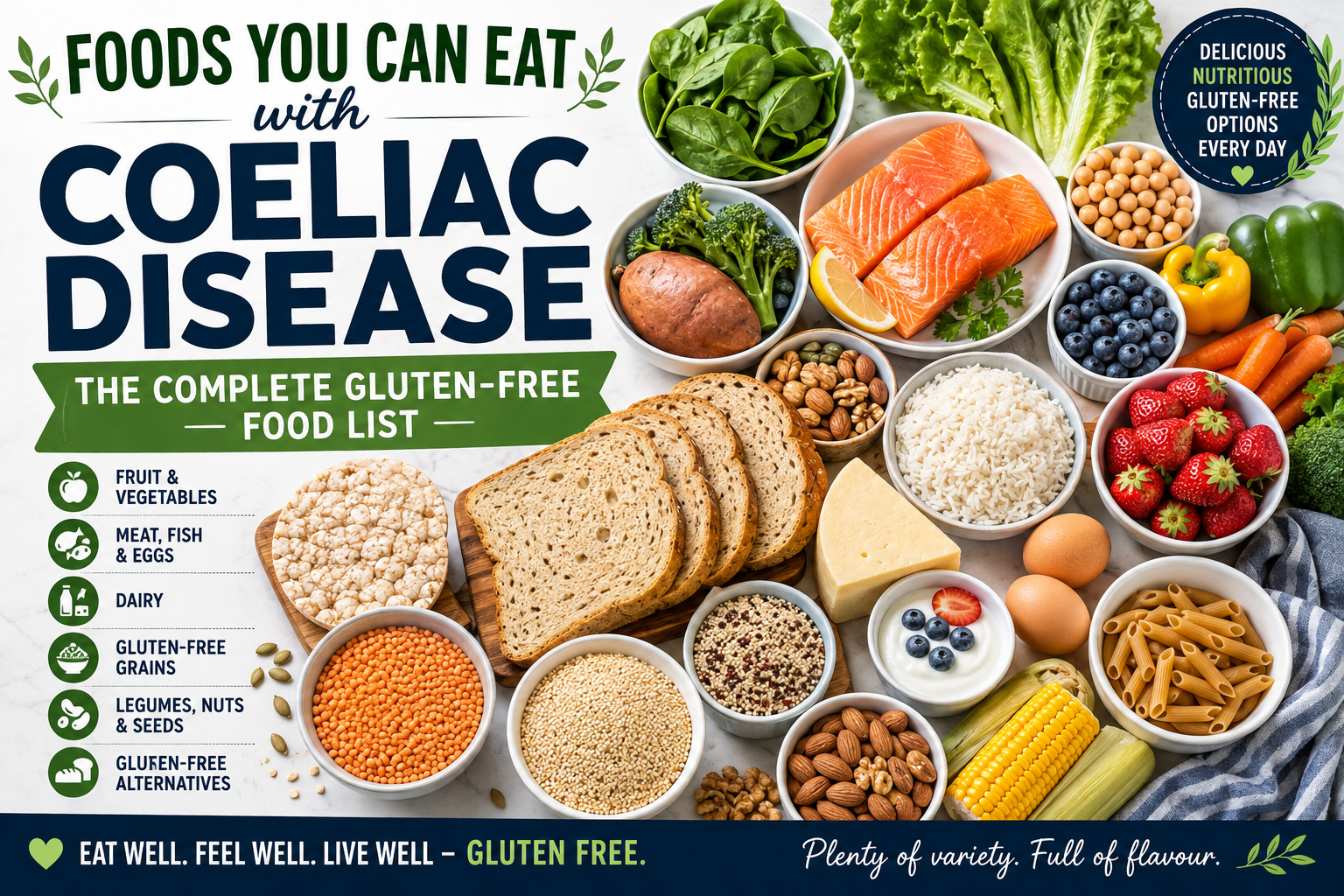
Being diagnosed with coeliac disease can make it feel like your list of foods has suddenly become very small.
No regular bread.
No regular pasta.
No regular cakes or biscuits.
You start reading food labels and discovering gluten in products you never expected, and before long you may find yourself wondering:
What CAN I actually eat with coeliac disease?
Fortunately, the answer is a lot.
There are hundreds of foods you can eat with coeliac disease, including fruit, vegetables, meat, fish, eggs, dairy products, rice, potatoes, legumes, nuts, seeds and naturally gluten-free grains.
There are also now gluten-free versions of many foods that traditionally contain wheat, including bread, pasta, pizza, crackers and flour.
A gluten-free diet doesn’t have to mean eating boring food or spending your life in the tiny gluten-free section of the supermarket.
This complete food list will show you what you can eat, which foods require a label check, and how to build simple gluten-free breakfasts, lunches, dinners and snacks.
What Can You Eat With Coeliac Disease?
The simplest answer is:
Foods that don’t contain gluten and haven’t been contaminated with gluten during preparation or processing.
Gluten is found in:
- Wheat
- Barley
- Rye
There are also ingredients made from these grains that need to be avoided unless they’ve been specifically processed and labelled as suitable under the relevant gluten-free standards.
Someone with coeliac disease needs to follow a strict gluten-free diet because eating gluten triggers an immune reaction that can damage the small intestine.
However, removing gluten doesn’t mean removing entire categories such as carbohydrates, grains or desserts.
It simply means choosing suitable alternatives.
Foods You Can Eat With Coeliac Disease: Quick List
If you’ve just been diagnosed and want a simple starting point, here are some naturally gluten-free foods:
Fruit
✓ Apples
✓ Bananas
✓ Oranges
✓ Berries
✓ Grapes
✓ Kiwifruit
✓ Melons
✓ Mangoes
Vegetables
✓ Potatoes
✓ Kumara/sweet potato
✓ Carrots
✓ Broccoli
✓ Cauliflower
✓ Pumpkin
✓ Tomatoes
✓ Capsicum/peppers
Protein
✓ Plain beef
✓ Plain chicken
✓ Plain lamb
✓ Plain pork
✓ Fresh fish
✓ Seafood
✓ Eggs
Dairy
✓ Plain milk
✓ Plain cheese
✓ Butter
✓ Cream
✓ Plain yoghurt
Carbohydrates and Grains
✓ Rice
✓ Potatoes
✓ Corn
✓ Quinoa
✓ Buckwheat
✓ Millet
✓ Polenta
Legumes, Nuts and Seeds
✓ Chickpeas
✓ Lentils
✓ Beans
✓ Peanuts
✓ Almonds
✓ Cashews
✓ Chia seeds
✓ Pumpkin seeds
That’s already a huge range of food before we’ve even considered specially made gluten-free products.
Let’s look at each category in more detail.
1. Fresh Fruit
All plain fresh fruit is naturally gluten free.
That means you can enjoy:
- Apples
- Apricots
- Bananas
- Blackberries
- Blueberries
- Cherries
- Grapes
- Grapefruit
- Kiwifruit
- Lemons
- Limes
- Mangoes
- Mandarins
- Nectarines
- Oranges
- Passionfruit
- Peaches
- Pears
- Pineapple
- Plums
- Raspberries
- Strawberries
- Watermelon
Fresh fruit is one of the easiest foods to buy because there’s normally no ingredients list to decipher.
You can simply choose the fruit you enjoy.
Is Frozen Fruit Gluten Free?
Plain frozen fruit is naturally gluten free too.
Frozen:
- Berries
- Mango
- Pineapple
- Cherries
- Mixed fruit
can be useful for smoothies, desserts and baking.
As soon as additional ingredients are added, however, check the label.
Fruit products containing sauces, crumble toppings, cereal or other additions may no longer be gluten free.
Is Canned Fruit Gluten Free?
Plain canned fruit may be suitable, particularly fruit packed in juice or syrup.
However, packaged products should still be checked individually.
Be more cautious with:
- Fruit pie fillings
- Flavoured fruit cups
- Fruit desserts
- Fruit with custard
- Fruit products containing toppings
The fruit itself isn’t the problem. It’s the additional ingredients that may need checking.
2. Fresh Vegetables
Plain vegetables are naturally gluten free.
You can eat an enormous variety, including:
- Asparagus
- Beetroot
- Broccoli
- Brussels sprouts
- Cabbage
- Capsicum/peppers
- Carrots
- Cauliflower
- Celery
- Corn
- Courgettes/zucchini
- Cucumber
- Eggplant/aubergine
- Garlic
- Green beans
- Lettuce
- Mushrooms
- Onions
- Peas
- Potatoes
- Pumpkin
- Spinach
- Sweet potato/kumara
- Tomatoes
This gives you plenty of options for salads, soups, stir-fries, roast dinners and side dishes.
Are Frozen Vegetables Gluten Free?
Plain frozen vegetables are generally naturally gluten free.
They can also be cheaper than fresh produce and last much longer.
The important word is plain.
Check the ingredients on frozen vegetables containing:
- Sauces
- Seasonings
- Crumb coatings
- Cheese sauces
- Flavour sachets
3. Potatoes
Yes, people with coeliac disease can eat potatoes.
This is worth saying clearly because potatoes are sometimes incorrectly grouped together with gluten-containing carbohydrates.
Potatoes don’t contain gluten.
You can enjoy:
- Boiled potatoes
- Baked potatoes
- Mashed potatoes
- Homemade roast potatoes
- Homemade potato wedges
The risk appears when other ingredients are added.
For example, restaurant chips may be cooked in oil shared with battered foods.
Frozen chips or wedges may also contain coatings or seasonings.
So:
Plain potato = naturally gluten free.
Processed potato product = check the label and preparation method.
4. Rice
Rice is another naturally gluten-free staple.
You can eat:
- White rice
- Brown rice
- Jasmine rice
- Basmati rice
- Arborio rice
- Wild rice
Rice can be used for:
- Stir-fries
- Curries
- Risotto
- Rice salads
- Side dishes
- Rice pudding
Plain rice is naturally gluten free, but flavoured rice packets need to be checked because seasoning mixes and sauces can contain gluten.
5. Meat
Plain, fresh meat is naturally gluten free.
This includes:
- Beef
- Lamb
- Pork
- Chicken
- Turkey
A steak doesn’t suddenly become off-limits because you have coeliac disease.
However, processing is where you need to become careful.
Check the ingredients on:
- Sausages
- Burger patties
- Meatballs
- Deli meat
- Marinated meat
- Crumbed meat
- Seasoned chicken
- Schnitzel
These can contain breadcrumbs, wheat-based fillers, sauces or seasonings.
6. Fish and Seafood
Plain fish and seafood are naturally gluten free.
Examples include:
- Salmon
- Tuna
- Snapper
- Cod
- Prawns
- Mussels
- Scallops
- Crayfish/lobster
You can grill, bake, steam or pan-fry fish using gluten-free ingredients.
The problem usually isn’t the fish itself.
It’s the batter, crumbs, marinade or cooking method.
For example, fish cooked in the same fryer as regular battered fish may be exposed to gluten.
7. Eggs
Plain eggs are naturally gluten free.
You can enjoy:
- Boiled eggs
- Poached eggs
- Scrambled eggs
- Fried eggs
- Omelettes
- Frittatas
Just make sure the ingredients you add are also suitable.
At cafés and restaurants, people with coeliac disease may also need to ask whether shared grills, utensils or other cooking surfaces create a cross-contact risk.
8. Milk
Plain milk is naturally gluten free.
This generally includes:
- Full-fat milk
- Reduced-fat milk
- Skim milk
Flavoured milk is different because additional ingredients have been added.
Always check flavoured milk and milk-based drinks individually.
9. Cheese
Many plain cheeses are naturally gluten free.
These can include:
- Cheddar
- Mozzarella
- Parmesan
- Feta
- Brie
- Camembert
- Cottage cheese
Processed or flavoured cheese products may contain additional ingredients, so check the label.
10. Yoghurt
Plain natural yoghurt is generally a straightforward option.
Flavoured yoghurts need more attention.
Be especially careful with yoghurts containing:
- Granola
- Biscuit pieces
- Cereal
- Cookie crumbs
- Dessert toppings
Again, you don’t need to avoid yoghurt—you simply need to choose a suitable product.
11. Beans and Legumes
Beans and legumes are naturally gluten free and can be inexpensive pantry staples.
Options include:
- Chickpeas
- Kidney beans
- Black beans
- Cannellini beans
- Lentils
- Split peas
- Butter beans
They’re useful for:
- Soups
- Curries
- Salads
- Chilli
- Dips
- Vegetarian meals
Plain dried legumes are naturally gluten free. Check canned varieties containing sauces or seasonings.
12. Nuts and Seeds
Plain nuts and seeds are naturally gluten free.
You can enjoy:
- Almonds
- Peanuts
- Cashews
- Walnuts
- Brazil nuts
- Pistachios
- Sunflower seeds
- Pumpkin seeds
- Chia seeds
- Linseeds/flaxseeds
- Sesame seeds
Flavoured or coated nuts need to be checked because seasoning mixtures can contain gluten-containing ingredients.
13. Naturally Gluten-Free Grains
Wheat isn’t the only grain available.
Depending on local labelling and cross-contact considerations, naturally gluten-free options include:
- Rice
- Corn/maize
- Quinoa
- Buckwheat
- Millet
- Sorghum
- Amaranth
Is Buckwheat Gluten Free?
Despite having the word “wheat” in its name, buckwheat isn’t actually wheat.
It is naturally gluten free.
However, flour and processed grain products can be exposed to gluten during manufacturing, so check packaging carefully and choose products suitable for a gluten-free diet.
What About Oats?
Oats need special attention.
The rules and medical advice around oats and coeliac disease vary between countries. Oats can also be contaminated with wheat, barley or rye during growing and processing, and some people with coeliac disease react to the oat protein avenin.
For that reason, don’t simply add ordinary oats to your diet after diagnosis because you’ve heard that oats “don’t contain gluten.”
Speak with your doctor or dietitian and follow the coeliac guidance and food-labelling rules for the country where you live.
You Don’t Have to Live on “Gluten-Free Products”
This is one of the most important things for newly diagnosed people to understand.
You don’t need a diet consisting entirely of products with GLUTEN FREE written across the front.
Many of the foods we’ve just covered don’t naturally contain gluten in the first place.
A simple dinner could be:
Grilled chicken + roast potatoes + broccoli + carrots.
Or:
Beef + vegetables + rice.
Or:
Baked fish + mashed potato + salad.
These aren’t unusual “gluten-free meals.”
They’re simply normal meals made from naturally gluten-free ingredients.
Learning this can make a gluten-free diet feel much less restrictive—and can make your grocery bill much more manageable.
Coming Up in Part 2
Next we’ll cover the foods people usually miss the most:
- Gluten-free bread
- Pasta
- Pizza
- Crackers
- Breakfast cereals
- Flour and baking
- Sauces
- Condiments
- Snacks
- Chocolate
- Ice cream
- Desserts
- Takeaways
- Drinks
- Alcohol
We’ll also answer questions such as “Can coeliacs eat chocolate?”, “Can coeliacs eat chips?” and “Can coeliacs drink alcohol?”
Gluten-Free Alternatives: Bread, Pasta, Snacks, Desserts & More
Knowing that fruit, vegetables, rice, potatoes, meat and dairy can be gluten free is reassuring—but you probably don’t want to spend the rest of your life without bread, pasta, pizza or the occasional piece of cake.
Fortunately, you don’t have to.
There are now gluten-free alternatives for almost every traditional wheat-based food.
The important thing is knowing which products need a gluten-free alternative and which products simply need their labels checked.
14. Gluten-Free Bread
Regular bread is usually made from wheat flour and isn’t suitable for someone with coeliac disease.
However, there are plenty of gluten-free alternatives available.
Depending on your supermarket, you may find:
- White gluten-free bread
- Seeded bread
- Wholegrain-style bread
- Bread rolls
- Burger buns
- Hot dog buns
- Fruit bread
- Sourdough-style gluten-free bread
- Gluten-free bagels
Gluten-free bread is often made from combinations of rice flour, tapioca starch, potato starch, corn or other gluten-free ingredients.
Remember the Toaster
Once you’ve bought your gluten-free bread, you also need to protect it from cross-contact.
Putting gluten-free bread into a toaster filled with crumbs from regular bread can expose it to gluten.
A dedicated gluten-free toaster is one practical option in a shared household.
15. Gluten-Free Pasta
Regular pasta is commonly made from durum wheat or semolina.
Gluten-free pasta can instead be made from:
- Rice
- Corn
- Chickpeas
- Lentils
- Peas
- Quinoa
- Gluten-free flour blends
You can find gluten-free versions of many popular pasta shapes, including:
- Spaghetti
- Penne
- Fusilli
- Lasagne sheets
- Macaroni
This means dishes such as spaghetti bolognese, lasagne and macaroni cheese can still be part of a gluten-free diet when suitable ingredients are used.
16. Gluten-Free Pizza
Yes, you can still eat pizza with coeliac disease.
You need a gluten-free pizza base and gluten-free toppings.
You can:
- Buy gluten-free pizza bases.
- Make your own.
- Buy some frozen gluten-free pizzas.
- Order from restaurants that cater appropriately for coeliac disease.
The biggest concern when ordering pizza is often cross-contact.
A gluten-free base doesn’t necessarily make a restaurant pizza safe if it’s prepared on a flour-covered bench, cut with shared equipment or cooked in a way that exposes it to gluten.
Always ask about preparation.
17. Gluten-Free Wraps and Tortillas
Regular flour wraps usually contain wheat.
Alternatives can include wraps made from:
- Corn
- Rice flour
- Tapioca
- Chickpea flour
- Gluten-free flour blends
Don’t assume every corn tortilla is suitable just because corn is naturally gluten free. Check the individual product.
18. Gluten-Free Crackers
There are many gluten-free crackers available, including varieties made from:
- Rice
- Corn
- Seeds
- Chickpeas
- Lentils
- Gluten-free flour blends
They’re useful for:
- Cheese and crackers
- Lunchboxes
- Dips
- Snacks
- Entertaining
Rice crackers also need to be checked because some flavoured versions contain ingredients such as wheat-containing soy sauce.
19. Breakfast Cereal
Breakfast cereal is one of the foods that requires careful label reading.
Many regular cereals contain wheat or barley malt.
Fortunately, gluten-free alternatives are available.
Depending on where you live, you may find suitable:
- Corn-based cereals
- Rice cereals
- Gluten-free granola
- Gluten-free muesli
- Puffed cereals
Look for products appropriate for a gluten-free diet rather than assuming a cereal is safe because its main ingredient is rice or corn.
20. Gluten-Free Flour
You can still bake after a coeliac disease diagnosis.
You simply need to replace regular wheat flour.
Gluten-free flour options include:
- Rice flour
- Cornflour/cornstarch
- Tapioca starch
- Potato starch
- Almond flour
- Coconut flour
- Chickpea flour
- Buckwheat flour
- Premixed gluten-free flour blends
For beginners, an all-purpose gluten-free flour blend can be one of the easiest options because it’s designed to replace regular flour in many recipes.
21. Cakes and Biscuits
Regular cakes and biscuits usually contain wheat flour.
But gluten-free versions are widely available.
You can buy or make:
- Chocolate cake
- Vanilla cake
- Cupcakes
- Brownies
- Cookies
- Shortbread-style biscuits
- Muffins
- Slices
A coeliac diagnosis doesn’t mean you can never have birthday cake again.
You simply need one made with suitable gluten-free ingredients and prepared without gluten cross-contact.
22. Can Coeliacs Eat Chocolate?
Yes, some chocolate is suitable for people with coeliac disease—but not all chocolate is gluten free.
Plain chocolate may be suitable depending on the product.
You need to check chocolate containing:
- Biscuit pieces
- Wafer
- Cookie pieces
- Malt
- Pretzels
- Cereal pieces
Also check seasonal and novelty products individually because ingredients can differ from a company’s standard chocolate bars.
23. Can Coeliacs Eat Lollies and Sweets?
Some lollies and sweets are gluten free, while others aren’t.
Products requiring particular attention include:
- Liquorice
- Wafer sweets
- Malted confectionery
- Sweets containing biscuit pieces
- Some chewy sweets
Liquorice is especially easy to overlook because wheat flour is commonly used in some varieties.
Read the ingredients rather than relying on the type of sweet.
24. Can Coeliacs Eat Potato Chips?
Yes—but not every packet is automatically gluten free.
Potatoes themselves don’t contain gluten.
The problem can be the:
- Seasoning
- Flavouring
- Coating
- Manufacturing process
Check each packet individually, particularly flavoured varieties.
25. Popcorn
Plain popcorn made from corn is naturally gluten free.
Once flavourings are added, check the label.
This applies to:
- Cheese popcorn
- Caramel popcorn
- Microwave popcorn
- Flavoured popcorn
Homemade popcorn using plain kernels can be a simple gluten-free snack.
26. Sauces and Condiments
You don’t need to eat dry, flavourless meals just because you’re gluten free.
There are suitable versions of many popular sauces.
However, this is a category where you should always read the label.
Check:
- Tomato sauce/ketchup
- BBQ sauce
- Mayonnaise
- Mustard
- Sweet chilli sauce
- Worcestershire sauce
- Teriyaki sauce
- Oyster sauce
- Salad dressings
- Pasta sauces
- Curry sauces
Ingredients vary enormously between brands.
27. Soy Sauce
Traditional soy sauce frequently contains wheat.
Fortunately, gluten-free soy sauce is available.
Some tamari products may also be suitable, but don’t assume all tamari is automatically gluten free—check the label.
This is particularly important when ordering:
- Sushi
- Stir-fries
- Marinades
- Asian-style sauces
28. Stock and Gravy
Stock and gravy can contain gluten depending on the ingredients.
Look for suitable versions of:
- Chicken stock
- Beef stock
- Vegetable stock
- Stock cubes
- Stock powders
- Gravy mixes
Homemade gravy can also be made using a suitable gluten-free thickener instead of wheat flour.
29. Soup
Soup can absolutely be part of a gluten-free diet.
Homemade options might include:
- Pumpkin soup
- Tomato soup
- Vegetable soup
- Chicken soup
- Potato and leek soup
- Lentil soup
Packaged soups require a label check because they may contain wheat flour, barley, noodles, stock or thickeners.
30. Ice Cream
Some ice creams are gluten free, while others contain obvious gluten ingredients.
Check flavours containing:
- Cookies
- Brownies
- Cheesecake pieces
- Waffle cones
- Biscuit crumbs
- Malt
At an ice cream shop, cross-contact can also happen when the same scoop is used across different flavours.
31. Desserts
Having coeliac disease doesn’t mean dessert disappears.
Depending on ingredients and preparation, gluten-free desserts can include:
- Pavlova
- Meringues
- Rice pudding
- Jelly
- Fruit salad
- Cheesecake with a gluten-free base
- Gluten-free brownies
- Gluten-free cake
- Ice cream
- Chocolate mousse
Always check recipes and packaged products individually.
32. Can Coeliacs Eat Takeaways?
Yes, but takeaway food requires more care because you don’t control the kitchen.
Possible options vary enormously depending on how they’re prepared.
Ask restaurants about:
- Ingredients
- Sauces
- Marinades
- Batter
- Crumbs
- Shared grills
- Shared fryers
- Preparation surfaces
For example, chips made entirely from potatoes may still be unsuitable if they’re fried in oil shared with battered foods.
A menu saying “gluten free” doesn’t always tell you how carefully cross-contact is managed, so people with coeliac disease may need to ask additional questions.
33. Can Coeliacs Eat at Restaurants?
Yes.
Eating out can still be an enjoyable part of life after diagnosis.
Before ordering, tell staff that you have coeliac disease and need your meal to be gluten free.
Useful questions include:
- Is this dish suitable for someone with coeliac disease?
- Is it prepared separately?
- Is the fryer shared?
- Does the sauce contain gluten?
- Is the grill shared with bread or crumbed foods?
- Is gluten-free bread toasted separately?
Clear communication is one of your best tools when eating away from home.
34. Coffee and Tea
Plain coffee and plain tea don’t normally contain gluten.
However, check:
- Flavoured coffee mixes
- Instant specialty coffees
- Syrups
- Drink powders
- Hot chocolate
- Malted beverages
At cafés, you can also ask about any powders, flavourings or additions used in your drink.
35. Can Coeliacs Drink Alcohol?
Some alcoholic drinks can be suitable, while others contain gluten or require more investigation.
Traditional Beer
Traditional beer is commonly made from barley and isn’t suitable for a gluten-free diet.
Gluten-free beer alternatives are available.
Wine
Plain wine is generally considered gluten free.
Spirits
Distillation removes gluten proteins from spirits, including those originally made from gluten-containing grains. However, flavourings or other ingredients added after distillation may need to be checked.
Premixed Drinks
Premixed alcoholic beverages should be checked individually because they may contain additional flavourings or ingredients.
What About “May Contain” Labels?
Precautionary allergen statements can be confusing because labelling rules differ between countries.
Statements may include:
- May contain wheat
- May contain gluten
- Made on equipment that also processes wheat
If you have coeliac disease, don’t guess based on wording alone.
Follow the food-labelling guidance applicable in your country and discuss any uncertainty with your dietitian or national coeliac organisation.
A Simple Way to Decide What You Can Eat
When looking at a food, put it into one of three groups:
🟢 Naturally Gluten Free
Examples:
- Fruit
- Vegetables
- Plain meat
- Fish
- Eggs
- Rice
- Potatoes
These are generally the easiest choices.
🟠 Check the Label
Examples:
- Sausages
- Sauces
- Chocolate
- Chips
- Cereal
- Ice cream
- Soup
Some products are suitable and some aren’t.
🔴 Needs a Gluten-Free Alternative
Examples:
- Bread
- Pasta
- Wheat flour
- Crackers
- Cakes
- Biscuits
- Pizza bases
Choose versions specifically made to be gluten free.
Don’t Focus Only on What You Can’t Eat
When someone first tells you that you can’t eat gluten anymore, it’s easy to mentally create a huge list of forbidden foods.
Bread.
Pasta.
Pizza.
Cake.
Biscuits.
Takeaways.
It can sound miserable.
But that’s not really what a modern gluten-free diet looks like.
Instead of thinking:
“I can’t eat pasta.”
Think:
“I need gluten-free pasta.”
Instead of:
“I can’t eat pizza.”
Think:
“I need a suitable gluten-free pizza.”
And instead of:
“I can’t eat cake.”
Think:
“I need cake made with gluten-free ingredients and prepared safely.”
That small change in perspective can make adapting to a coeliac diagnosis feel much more manageable.
Coming Up in Part 3
- A huge Foods You Can Eat With Coeliac Disease checklist
- Gluten-free breakfast ideas
- Easy lunch ideas
- Family dinner ideas
- Snack ideas
- Dessert ideas
- A simple 1-day gluten-free menu
- Budget-friendly foods
- Foods beginners should always double-check
- Frequently asked questions
- Key takeaways
- Trusted resources
- Medical disclaimer
The Complete Foods You Can Eat With Coeliac Disease Checklist
If you’ve made it this far, you’ve probably realised that a gluten-free diet includes far more food than you initially thought.
To make things easier, here’s a simple foods you can eat with coeliac disease checklist you can return to whenever you’re planning meals or writing your shopping list.
Remember that plain, naturally gluten-free foods are different from processed or flavoured versions. When additional ingredients are added, always check the label.
Fruit
Plain fresh fruit is naturally gluten free.
✓ Apples
✓ Apricots
✓ Bananas
✓ Berries
✓ Cherries
✓ Grapes
✓ Grapefruit
✓ Kiwifruit
✓ Lemons
✓ Limes
✓ Mangoes
✓ Mandarins
✓ Melons
✓ Nectarines
✓ Oranges
✓ Passionfruit
✓ Peaches
✓ Pears
✓ Pineapple
✓ Plums
✓ Strawberries
✓ Watermelon
Vegetables
Plain fresh vegetables are naturally gluten free.
✓ Asparagus
✓ Beetroot
✓ Broccoli
✓ Brussels sprouts
✓ Cabbage
✓ Capsicum/peppers
✓ Carrots
✓ Cauliflower
✓ Celery
✓ Corn
✓ Courgettes/zucchini
✓ Cucumber
✓ Eggplant/aubergine
✓ Garlic
✓ Green beans
✓ Lettuce
✓ Mushrooms
✓ Onions
✓ Peas
✓ Potatoes
✓ Pumpkin
✓ Spinach
✓ Kumara/sweet potato
✓ Tomatoes
Meat and Poultry
Plain, unprocessed meat is naturally gluten free.
✓ Beef
✓ Chicken
✓ Lamb
✓ Pork
✓ Turkey
Remember to check the ingredients on sausages, burger patties, deli meats, meatballs, marinades and seasoned meats.
Fish and Seafood
Plain fish and seafood are naturally gluten free.
✓ Salmon
✓ Tuna
✓ Snapper
✓ Cod
✓ Prawns
✓ Mussels
✓ Scallops
✓ Crayfish/lobster
Battered, crumbed, marinated and processed seafood requires additional checking.
Dairy and Eggs
Many plain dairy products and eggs are naturally gluten free.
✓ Eggs
✓ Milk
✓ Butter
✓ Cream
✓ Plain cheese
✓ Plain natural yoghurt
Check flavoured, processed or dessert-style dairy products individually.
Naturally Gluten-Free Carbohydrates and Grains
✓ Rice
✓ Potatoes
✓ Corn/maize
✓ Quinoa
✓ Buckwheat
✓ Millet
✓ Sorghum
✓ Amaranth
✓ Polenta
Processed grain products and flours may require gluten-free labelling because of cross-contact during manufacturing.
Oats require special consideration, so follow the coeliac guidance applicable where you live.
Beans and Legumes
✓ Chickpeas
✓ Kidney beans
✓ Black beans
✓ Cannellini beans
✓ Butter beans
✓ Lentils
✓ Split peas
Plain varieties are naturally gluten free. Check canned products containing sauces or flavourings.
Nuts and Seeds
✓ Almonds
✓ Cashews
✓ Peanuts
✓ Walnuts
✓ Brazil nuts
✓ Pistachios
✓ Chia seeds
✓ Pumpkin seeds
✓ Sunflower seeds
✓ Sesame seeds
✓ Linseeds/flaxseeds
Check seasoned, flavoured or coated varieties.
Gluten-Free Alternatives
You can also enjoy suitable gluten-free versions of:
✓ Bread
✓ Bread rolls
✓ Burger buns
✓ Wraps
✓ Pasta
✓ Noodles
✓ Pizza bases
✓ Crackers
✓ Breakfast cereals
✓ Flour
✓ Breadcrumbs
✓ Cakes
✓ Biscuits
✓ Muffins
✓ Pancakes
✓ Waffles
These are products where looking specifically for a suitable gluten-free version is important.
Gluten-Free Breakfast Ideas
Breakfast doesn’t need to become complicated after a coeliac diagnosis.
Here are some simple ideas.
Eggs and Gluten-Free Toast
Serve scrambled, poached or fried eggs with suitable gluten-free bread.
In a shared household, remember to protect gluten-free bread from crumbs in a regular toaster.
Yoghurt and Fruit
Combine plain or suitable flavoured yoghurt with:
- Strawberries
- Blueberries
- Banana
- Kiwifruit
- Nuts
- Seeds
If adding granola, make sure it is suitable for your gluten-free diet.
Gluten-Free Cereal
Choose a suitable gluten-free breakfast cereal and serve with milk and fresh fruit.
Smoothies
Blend combinations such as:
- Banana and milk
- Berries and yoghurt
- Mango and yoghurt
- Banana and peanut butter
Check any protein powders, flavourings or other packaged additions before using them.
Breakfast Potatoes
Potatoes aren’t only for dinner.
Try potatoes with eggs, vegetables and cheese for a naturally gluten-free cooked breakfast.
Easy Gluten-Free Lunch Ideas
Lunch is another meal that can remain simple.
Baked Potato
Top a baked potato with suitable:
- Cheese
- Tuna
- Beans
- Coleslaw
- Sour cream
Check packaged toppings and sauces.
Rice Bowl
Start with rice and add:
- Chicken
- Vegetables
- Egg
- Tuna
- Avocado
Finish with a suitable gluten-free sauce.
Salad
Build a filling salad using:
- Lettuce
- Tomato
- Cucumber
- Carrot
- Cheese
- Chicken
- Egg
- Tuna
- Chickpeas
Check salad dressings and croutons.
Gluten-Free Sandwich
Use gluten-free bread with fillings such as cheese, suitable ham, chicken, tuna, egg or salad.
Leftovers
One of the easiest gluten-free lunches is simply reheating a safe dinner from the night before.
Easy Gluten-Free Dinner Ideas
You don’t need complicated recipes to create gluten-free family dinners.
Try:
Roast Dinner
Roast chicken or meat with:
- Potatoes
- Pumpkin
- Carrots
- Green vegetables
Check gravy and seasonings.
Spaghetti Bolognese
Use gluten-free pasta with homemade or suitable packaged bolognese sauce.
Stir-Fry
Combine meat and vegetables with rice and a suitable gluten-free soy sauce or stir-fry sauce.
Homemade Burgers
Use suitable burger patties and gluten-free buns with salad and gluten-free condiments.
Tacos
Use suitable corn tortillas or gluten-free taco shells with mince, beans, lettuce, tomato and cheese.
Check seasoning mixes and sauces.
Curry and Rice
Many homemade curries can easily be made gluten free when all sauces, stocks and spices are suitable.
Baked Fish and Potatoes
Serve plain baked fish with potatoes and vegetables for a simple naturally gluten-free meal.
Gluten-Free Snack Ideas
You still have plenty of snack options.
Try:
- Fresh fruit
- Yoghurt
- Cheese
- Nuts
- Seeds
- Rice cakes
- Gluten-free crackers
- Vegetable sticks and hummus
- Suitable popcorn
- Suitable potato chips
- Gluten-free snack bars
- Hard-boiled eggs
- Suitable chocolate
Packaged snacks should still be checked individually.
Gluten-Free Dessert Ideas
Having coeliac disease doesn’t mean saying goodbye to dessert.
Depending on the ingredients and preparation, options can include:
- Pavlova
- Meringues
- Fruit salad
- Jelly
- Rice pudding
- Chocolate mousse
- Gluten-free brownies
- Gluten-free cake
- Gluten-free cheesecake
- Suitable ice cream
- Baked fruit
This is another area where cross-contact matters, particularly when desserts are bought from bakeries, cafés or restaurants.
Example of a Simple Gluten-Free Day
Still wondering what eating with coeliac disease might actually look like?
Here’s one simple example.
Breakfast
Gluten-free toast with scrambled eggs and fruit.
Morning Snack
Yoghurt and berries.
Lunch
Baked potato topped with tuna and cheese, served with salad.
Afternoon Snack
Rice crackers with cheese.
Dinner
Roast chicken with potatoes, pumpkin, carrots and broccoli.
Dessert
Fruit with suitable ice cream.
Nothing about that menu is particularly unusual.
That’s an important point.
Living with coeliac disease doesn’t mean every meal needs to look like a special “gluten-free meal.”
Many ordinary meals are already gluten free or can become gluten free with one or two simple substitutions.
Budget-Friendly Foods You Can Eat With Coeliac Disease
Specialty gluten-free products can be expensive, but naturally gluten-free foods can help keep your grocery bill manageable.
Budget-friendly staples can include:
- Rice
- Potatoes
- Beans
- Lentils
- Chickpeas
- Eggs
- Seasonal vegetables
- Seasonal fruit
- Frozen vegetables
- Canned tomatoes
- Plain meat when on special
Rather than trying to replace every wheat product with an expensive gluten-free equivalent, build more meals around foods that never needed gluten in the first place.
For example, rice and potatoes may be considerably cheaper than relying on specialty gluten-free bread at every meal.
Foods You Should Always Double-Check
Even after you become confident with a gluten-free diet, there are certain products worth checking carefully.
These include:
⚠ Sausages
⚠ Burger patties
⚠ Meatballs
⚠ Deli meats
⚠ Marinades
⚠ Soy sauce
⚠ Stock cubes
⚠ Gravy
⚠ Salad dressing
⚠ BBQ sauce
⚠ Seasoning mixes
⚠ Breakfast cereals
⚠ Potato chips
⚠ Rice crackers
⚠ Chocolate
⚠ Lollies/sweets
⚠ Ice cream
⚠ Soup
⚠ Frozen meals
⚠ Flavoured drinks
Some versions may be suitable and others may not.
This is why learning how to read labels is more useful than trying to memorise thousands of individual products.
Don’t Forget Cross-Contact
A naturally gluten-free food can become unsuitable if gluten is transferred onto it during preparation.
Examples include:
- Gluten-free bread placed in a shared toaster.
- Chips cooked in oil used for battered foods.
- Butter containing regular bread crumbs.
- Gluten-free pasta drained through a contaminated colander.
- Pizza prepared on a flour-covered surface.
If you’re new to this, read our full guide:
How to Avoid Gluten Cross-Contamination With Coeliac Disease
Frequently Asked Questions
Can People With Coeliac Disease Eat Rice?
Yes. Plain rice is naturally gluten free.
Flavoured rice products should be checked because additional seasonings or sauces may contain gluten.
Can People With Coeliac Disease Eat Potatoes?
Yes.
Plain potatoes are naturally gluten free.
Processed products such as frozen chips, wedges and hash browns need to be checked individually.
Can People With Coeliac Disease Eat Cheese?
Many plain cheeses are naturally gluten free.
Processed and flavoured cheese products may contain additional ingredients and should be checked.
Can People With Coeliac Disease Eat Chocolate?
Some chocolate is suitable, but not all.
Chocolate containing biscuits, wafers, malt, pretzels or cereal pieces may contain gluten. Check the individual product.
Can People With Coeliac Disease Eat Corn?
Plain corn is naturally gluten free.
Corn-based processed foods should still be checked for other ingredients and possible cross-contact.
Can People With Coeliac Disease Eat Meat?
Plain fresh meat is naturally gluten free.
Processed meat products such as sausages, burger patties and meatballs may contain gluten-containing fillers, breadcrumbs or seasonings.
Can People With Coeliac Disease Eat Dairy?
Many plain dairy foods such as milk, butter and plain cheese are naturally gluten free.
Flavoured and processed dairy products require additional checking.
Can People With Coeliac Disease Eat at Restaurants?
Yes, but extra care may be required.
Tell restaurant staff you have coeliac disease and ask about ingredients, preparation surfaces, shared fryers and other possible sources of cross-contact.
Key Takeaways
There are hundreds of foods you can eat with coeliac disease.
The easiest way to think about your diet is:
Eat Freely From Naturally Gluten-Free Foods
Fruit, vegetables, plain meat, fish, eggs, rice, potatoes, legumes and many plain dairy products provide plenty of choices.
Check Processed Foods
Sauces, seasonings, processed meats, snacks and convenience foods need closer inspection.
Replace Wheat-Based Staples
Choose suitable gluten-free versions of bread, pasta, flour, pizza bases, crackers and baked goods.
Prevent Cross-Contact
Keep your gluten-free food safe during preparation and cooking.
Read Labels Every Time
Ingredients and manufacturing processes can change.
Final Thoughts
Being diagnosed with coeliac disease can initially make food feel frightening and restrictive.
You suddenly notice everything you’re being told not to eat, and it’s easy to overlook the enormous variety of food that remains available.
But look back through this guide.
Fruit.
Vegetables.
Rice.
Potatoes.
Meat.
Fish.
Cheese.
Yoghurt.
Beans.
Nuts.
Chocolate.
Pizza.
Pasta.
Bread.
Cake.
You don’t necessarily have to give up the foods you enjoy.
Sometimes they’re naturally gluten free already. Other times, you simply need a suitable gluten-free alternative.
As you learn to read food labels, prevent cross-contact and discover products you enjoy, eating with coeliac disease becomes much less intimidating.
Instead of constantly asking “What can’t I eat?”, you’ll gradually become much more confident answering:
“What can I eat?”
And the answer is:
A lot more than you might think.
Related Gluten-Free Guides
If you’re newly diagnosed, these guides can help you continue learning:
How to Get Diagnosed With Coeliac Disease: Symptoms, Testing & Where to Get Help
35 Hidden Sources of Gluten: Foods, Drinks & Everyday Products Most People Miss
How to Read Gluten-Free Food Labels: A Beginner’s Guide
How to Avoid Gluten Cross-Contamination With Coeliac Disease
The Ultimate Gluten-Free Shopping Guide
Foods to Avoid With Coeliac Disease
Foods You Can Eat With Coeliac Disease
Eating Out With Coeliac Disease: How to Stay Safe
Add internal links to these articles rather than leaving them as plain text. This makes it easier for someone who finishes one guide to continue to another relevant page.
Trusted Information
Because coeliac disease is a medical condition, use reliable health and coeliac organisations when checking information.
Useful sources include:
- Coeliac New Zealand – https://coeliac.org.nz
- Health New Zealand | Te Whatu Ora – https://www.tewhatuora.govt.nz
- Coeliac Australia – https://www.coeliac.org.au
- Coeliac UK – https://www.coeliac.org.uk
- Celiac Disease Foundation – https://celiac.org
- Beyond Celiac – https://www.beyondceliac.org
- Canadian Celiac Association – https://www.celiac.ca
Food labelling and recommendations—particularly around oats—can differ between countries, so readers should follow guidance applicable to where they live.
Medical Disclaimer
This article is intended for general educational purposes and isn’t a substitute for individual medical or dietary advice. If you have coeliac disease, think you may have coeliac disease, or need help following a gluten-free diet, speak with your doctor or an appropriately qualified dietitian.
Leave a Reply
You must be logged in to post a comment.