Medical Disclaimer
The information provided in this article is for educational and informational purposes only and is not intended to replace professional medical advice, diagnosis, or treatment.
If you are experiencing symptoms that may be related to coeliac disease or another health condition, you should speak with a qualified healthcare professional, such as your doctor or a registered dietitian, for personalised advice.
Do not start a gluten-free diet before being tested for coeliac disease unless advised by a healthcare professional, as removing gluten can affect the accuracy of testing and may make it more difficult to receive a correct diagnosis.
The symptoms mentioned in this article are not exclusive to coeliac disease and may also occur with other medical conditions. Always seek professional medical guidance if you have concerns about your health.
Information in this article is based on reputable health organisations and sources available at the time of publication. Medical guidelines and recommendations can change, so readers should consult current advice from trusted healthcare providers and recognised coeliac disease organisations.
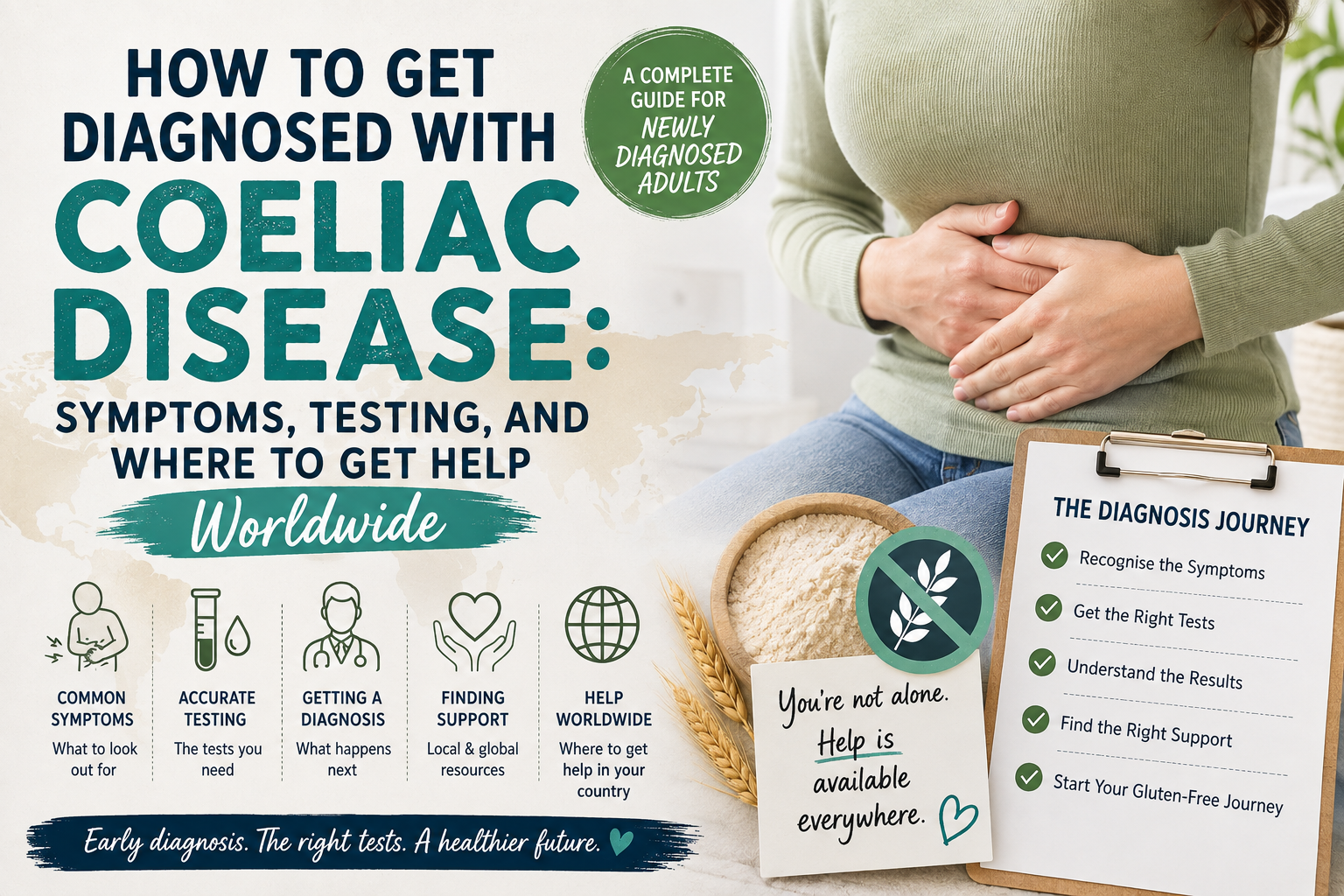
How to Get Diagnosed with Coeliac Disease: The Complete Beginner’s Guide
Receiving a diagnosis of coeliac disease can completely change your life—but for many people, finally getting answers also brings relief.
If you’ve been living with ongoing stomach pain, bloating, diarrhoea, constipation, unexplained tiredness, low iron, or other symptoms that never seem to improve, you may have wondered whether gluten could be the cause. The challenge is that coeliac disease doesn’t always look the same from one person to the next. Some people experience severe digestive problems, while others have almost no digestive symptoms at all.
In fact, researchers estimate that many people with coeliac disease remain undiagnosed for years because the symptoms are often mistaken for irritable bowel syndrome (IBS), stress, food intolerances, or other health conditions. During that time, ongoing exposure to gluten can continue to damage the small intestine and increase the risk of complications such as nutritional deficiencies and reduced bone health.
The good news is that coeliac disease can be diagnosed with the right medical tests, and once diagnosed, it can usually be managed successfully with a lifelong gluten-free diet.
This guide explains everything you need to know, including:
- What coeliac disease is
- Every common symptom to watch for
- Who should be tested
- How doctors diagnose coeliac disease
- Why you should never stop eating gluten before testing
- What happens after diagnosis
- Where to find support in New Zealand and around the world
Whether you’re looking for answers for yourself or someone you love, this guide will help you understand the diagnosis process from start to finish.
What Is Coeliac Disease?
Coeliac disease is an autoimmune condition—not a food allergy or a food intolerance.
When someone with coeliac disease eats gluten, their immune system mistakenly attacks the lining of the small intestine. Over time, this damages tiny finger-like projections called villi, which are responsible for absorbing nutrients from food.
When the villi become damaged, the body struggles to absorb important nutrients such as:
- Iron
- Calcium
- Vitamin D
- Vitamin B12
- Folate
- Zinc
This is why many people experience symptoms that don’t seem related to their digestive system.
Without treatment, coeliac disease can increase the risk of:
- Iron deficiency anaemia
- Osteoporosis
- Fertility problems
- Poor growth in children
- Vitamin deficiencies
- Malnutrition
- Other autoimmune conditions
The only current treatment is a strict lifelong gluten-free diet.
What Is Gluten?
Gluten is a naturally occurring protein found in three grains:
- Wheat
- Barley
- Rye
These grains are found in thousands of everyday foods, including:
- Bread
- Pasta
- Cakes
- Biscuits
- Breakfast cereals
- Pizza
- Pastries
- Crackers
- Beer
- Soy sauce
- Many processed foods
Gluten can also appear in less obvious places, such as:
- Gravy
- Stock cubes
- Salad dressings
- Marinades
- Processed meats
- Some medications
- Vitamin supplements
Because gluten is so common, many people continue eating it without realising it—even after symptoms begin.
What Are the Symptoms of Coeliac Disease?
One of the biggest reasons coeliac disease is often missed is that symptoms vary enormously between people.
Some people become seriously ill after eating gluten.
Others have no digestive symptoms whatsoever.
Instead, they may only experience fatigue, anaemia, headaches, or skin problems.
Doctors now recognise more than 200 symptoms and associated conditions linked with coeliac disease.
Digestive Symptoms
Digestive problems are among the most common symptoms.
These include:
- Ongoing bloating
- Frequent stomach pain
- Cramping
- Diarrhoea
- Constipation
- Excessive wind
- Nausea
- Vomiting
- Acid reflux
- Indigestion
- Feeling full quickly
- Pale or fatty stools
- Unexplained weight loss
- Difficulty gaining weight
Some people notice symptoms shortly after eating gluten, while others may not connect their symptoms with food at all.
Symptoms That Aren’t Digestive
Many adults with coeliac disease never realise their symptoms could be related to gluten because they affect other parts of the body.
These symptoms may include:
- Extreme tiredness
- Brain fog
- Difficulty concentrating
- Memory problems
- Frequent headaches
- Migraines
- Anxiety
- Depression
- Irritability
- Joint pain
- Muscle aches
- Weakness
- Tingling hands and feet
- Numbness
- Mouth ulcers
- Easy bruising
- Poor wound healing
- Hair loss
- Brittle nails
Many people spend years treating these symptoms individually before discovering that coeliac disease is the underlying cause.
Signs Caused by Poor Nutrient Absorption
Because the damaged intestine struggles to absorb nutrients, deficiencies are extremely common.
Your doctor may discover:
- Low iron
- Low vitamin D
- Low folate
- Low vitamin B12
- Low calcium
- Low magnesium
These deficiencies may cause:
- Fatigue
- Dizziness
- Shortness of breath
- Pale skin
- Muscle cramps
- Bone pain
- Frequent fractures
- Poor immunity
Sometimes these abnormalities appear in blood tests years before digestive symptoms become obvious.
Skin Symptoms
Some people develop a very itchy skin condition called dermatitis herpetiformis.
Despite its name, it isn’t caused by herpes.
Instead, it’s a skin manifestation of coeliac disease and causes:
- Intensely itchy skin
- Small blisters
- Clusters of bumps
- Burning sensation
- Rash on elbows
- Rash on knees
- Rash on buttocks
- Rash on scalp
For some people, this may be the only visible sign of coeliac disease.
Symptoms in Children
Children often develop different symptoms from adults.
Parents may notice:
- Poor weight gain
- Slow growth
- Delayed puberty
- Swollen tummy
- Chronic diarrhoea
- Constipation
- Irritability
- Behaviour changes
- Poor appetite
- Dental enamel defects
- Short stature
- Tiredness
Early diagnosis is particularly important because untreated coeliac disease can affect growth and development.
Could You Be at Higher Risk?
Some people have a much greater chance of developing coeliac disease than others.
You should consider discussing testing with your healthcare provider if you:
- Have a parent, sibling, or child with coeliac disease
- Have type 1 diabetes
- Have an autoimmune thyroid condition
- Have Down syndrome
- Have Turner syndrome
- Have unexplained iron deficiency
- Have osteoporosis at a young age
- Have persistent digestive symptoms
- Have dermatitis herpetiformis
Having one or more risk factors doesn’t mean you definitely have coeliac disease—but it does make testing worth discussing with your doctor.
Next up in Part 2
In the next section, we’ll cover:
- Exactly how doctors diagnose coeliac disease
- The blood tests you’ll need
- What an endoscopy and biopsy involve
- Why you should never stop eating gluten before testing
- Common mistakes that delay diagnosis
- What happens if your tests are negative but you still have symptoms
How Is Coeliac Disease Diagnosed?
One of the most common mistakes people make is removing gluten from their diet before speaking to a doctor.
It might seem like the logical thing to do—especially if you suspect gluten is making you sick—but doing so can actually make coeliac disease much harder to diagnose.
The tests doctors use rely on your immune system actively reacting to gluten. If you’ve already stopped eating it, your body may stop producing the antibodies doctors are looking for, and your small intestine may begin to heal. This can lead to normal test results even if you do have coeliac disease.
If you think you might have coeliac disease, continue eating gluten until your doctor tells you it’s safe to stop.
Step 1: Book an Appointment with Your Doctor
The first step is to make an appointment with your GP (family doctor).
Before your appointment, it can help to keep a symptom diary for a couple of weeks. Write down:
- Your digestive symptoms
- Foods you eat
- When symptoms occur
- Any weight changes
- Low energy levels
- Headaches
- Skin rashes
- Family history of coeliac disease or autoimmune diseases
This information can help your doctor decide whether testing is appropriate.
During your appointment, your doctor will ask about:
- Your symptoms
- How long you’ve had them
- Your medical history
- Your family’s medical history
- Any recent blood test results
- Whether you’ve already started eating gluten free
Don’t be embarrassed if your symptoms seem unrelated. Fatigue, headaches, skin rashes, infertility, and iron deficiency can all be important clues.
Step 2: Blood Tests
If your doctor suspects coeliac disease, they’ll usually order blood tests.
These tests don’t diagnose coeliac disease on their own, but they can show whether your immune system is reacting to gluten.
The most commonly used blood test is:
Tissue Transglutaminase Antibody (tTG-IgA)
This is considered the first-line screening test in many countries because it is highly accurate when you’re eating enough gluten.
Your doctor may also request:
- Total IgA level
- Endomysial antibodies (EMA-IgA)
- Deamidated gliadin peptide (DGP-IgG or IgA)
Some people have an IgA deficiency, which can affect test accuracy. In these cases, your doctor may use different antibody tests.
How Much Gluten Do You Need to Eat Before Testing?
This is one of the questions doctors hear most often.
There isn’t one exact amount that suits everyone, but many medical guidelines recommend continuing to eat gluten regularly before testing.
For many people, this means eating gluten-containing foods daily for several weeks before blood tests or a biopsy, unless your doctor advises otherwise.
If you’ve already stopped eating gluten, don’t start eating it again without discussing it with your healthcare provider. Your doctor can advise whether a supervised gluten challenge is appropriate.
What If Your Blood Tests Are Positive?
If your blood tests suggest coeliac disease, your doctor will usually refer you to a gastroenterologist.
A gastroenterologist is a specialist in conditions affecting the digestive system.
The specialist will review your symptoms, blood test results, and medical history before deciding on the next step.
For most adults, this usually involves an endoscopy with a biopsy to confirm the diagnosis.
Step 3: Endoscopy and Biopsy
Hearing the word “endoscopy” can sound frightening, but it’s a routine procedure performed every day around the world.
An upper gastrointestinal endoscopy allows doctors to examine the inside of your upper digestive tract using a thin, flexible tube with a tiny camera on the end.
The procedure usually takes around 15 to 30 minutes.
During the examination, the doctor gently passes the camera through your mouth and into your oesophagus, stomach, and the first part of your small intestine.
You’ll usually receive sedation or medication to help you relax, and many people remember very little about the procedure afterwards.
Why Is a Biopsy Needed?
During the endoscopy, the doctor will take several tiny tissue samples (biopsies) from your small intestine.
These samples are examined under a microscope to look for damage to the intestinal villi.
Healthy villi look like tiny fingers that help absorb nutrients.
In people with untreated coeliac disease, these villi may become shortened, flattened, or damaged due to the immune response triggered by gluten.
A biopsy remains the standard method of confirming coeliac disease in most adults.
Can Children Be Diagnosed Without a Biopsy?
In some countries, certain children with very high antibody levels and other specific test results may be diagnosed without an intestinal biopsy.
However, this approach isn’t suitable for everyone and depends on current clinical guidelines and the advice of a paediatric specialist.
Adults are still commonly advised to have a biopsy to confirm the diagnosis.
What Happens If Your Tests Are Normal?
A normal blood test doesn’t always completely rule out coeliac disease.
In some situations:
- You may not have been eating enough gluten before testing.
- Your body may not produce the antibodies being measured.
- Another digestive condition may be causing your symptoms.
If symptoms continue, your doctor may recommend additional investigations.
These could include looking for:
- Irritable bowel syndrome (IBS)
- Inflammatory bowel disease (IBD)
- Lactose intolerance
- Microscopic colitis
- Small intestinal bacterial overgrowth (SIBO)
- Food allergies
- Other autoimmune conditions
Sometimes a gastroenterologist may recommend further testing even if the initial blood tests are negative.
Can You Test Yourself at Home?
Home testing kits for coeliac disease are available in some countries.
While these tests may detect certain antibodies, they cannot diagnose coeliac disease on their own.
A positive home test should always be followed up by a healthcare professional, and a negative result does not necessarily rule the condition out.
For an accurate diagnosis, medical assessment, laboratory testing, and, where appropriate, an intestinal biopsy are still considered the most reliable approach.
Common Mistakes That Can Delay a Diagnosis
Many people unknowingly make mistakes that can make diagnosing coeliac disease more difficult.
1. Going Gluten Free Too Soon
Starting a gluten-free diet before testing can reduce antibody levels and allow the intestine to heal, making tests less accurate.
2. Ignoring Mild Symptoms
Some people assume occasional bloating, tiredness, or headaches are normal and delay seeking medical advice for years.
3. Self-Diagnosing
Feeling better after removing gluten doesn’t necessarily mean you have coeliac disease. Other conditions, including non-coeliac gluten sensitivity or wheat allergy, can cause similar symptoms.
4. Assuming It’s “Just IBS”
Many people are initially told they have irritable bowel syndrome. Because the symptoms overlap, it’s important to discuss coeliac testing with your doctor before accepting an IBS diagnosis, particularly if you have risk factors or unexplained nutrient deficiencies.
5. Not Mentioning Family History
If a close family member has coeliac disease, make sure your doctor knows. This information can influence the decision to test.
What Happens If You’re Diagnosed?
Receiving a diagnosis can feel overwhelming at first, but many people also feel relieved to finally understand what’s been causing their symptoms.
The next steps usually include:
- Starting a strict lifelong gluten-free diet.
- Meeting with a dietitian experienced in coeliac disease.
- Having blood tests to check for vitamin and mineral deficiencies.
- Monitoring your recovery through follow-up appointments.
- Learning how to avoid hidden sources of gluten and cross-contamination.
Many people notice improvements in their symptoms within weeks of removing gluten, although healing of the small intestine may take much longer, especially in adults.
Coming up in Part 3
In the final section, we’ll cover:
- Where to get help in New Zealand, Australia, the UK, USA, Canada, and other countries
- Trusted coeliac support organisations
- Frequently asked questions
- Long-term outlook after diagnosis
- A strong conclusion and medical disclaimer
- References from reputable health organisations
Life After a Coeliac Disease Diagnosis
For many people, finally receiving a diagnosis brings mixed emotions. You may feel relieved to have an explanation for your symptoms, but you may also feel overwhelmed by the thought of following a strict gluten-free diet for the rest of your life.
The good news is that most people begin to feel better once gluten is completely removed from their diet. As the small intestine heals, nutrient absorption improves, and many symptoms gradually disappear. The time it takes to recover varies from person to person. Some people notice improvements within a few weeks, while for others, complete healing may take months or even several years.
It’s important to remember that healing doesn’t happen overnight. Even if you start feeling better quickly, your intestine may still be recovering. That’s why it’s essential to continue following your healthcare provider’s advice and attend any recommended follow-up appointments.
Building a Gluten-Free Lifestyle
Learning to live gluten free is about much more than swapping regular bread for gluten-free bread. It involves understanding where gluten can hide, preventing cross-contamination, and becoming confident when shopping, cooking, travelling, and eating out.
Here are some practical tips to help you get started:
Learn to Read Food Labels
One of the most important skills you’ll develop is reading ingredient lists carefully. Gluten can appear in unexpected places, including sauces, soups, processed meats, and seasonings.
If you’re new to label reading, our guide “How to Read Gluten-Free Food Labels: A Beginner’s Guide” will walk you through everything you need to know.
Check for Hidden Gluten
Many everyday products can contain gluten, including soy sauce, stock cubes, flavoured chips, marinades, and some medications.
Our article “Common Hidden Sources of Gluten: Foods, Drinks & Everyday Products to Watch Out For” explains where gluten is most commonly hidden and how to avoid it.
Prevent Cross-Contamination
Even tiny amounts of gluten can be enough to trigger an immune response in someone with coeliac disease.
Simple changes can make a big difference, such as:
- Having a separate toaster for gluten-free bread.
- Using clean chopping boards and utensils.
- Keeping gluten-free spreads separate to avoid crumbs.
- Washing hands before preparing gluten-free meals.
Where to Get Help Around the World
Being diagnosed with coeliac disease can feel isolating, but you don’t have to navigate it alone. There are excellent organisations around the world that provide reliable information, practical advice, recipes, and ongoing support.
New Zealand
Coeliac New Zealand provides trusted information about diagnosis, gluten-free living, food labelling, and support groups.
Website: https://coeliac.org.nz
Health New Zealand | Te Whatu Ora also offers evidence-based information about symptoms, diagnosis, and treatment.
Website: https://www.tewhatuora.govt.nz
Australia
Coeliac Australia provides educational resources, accredited dietitian information, recipes, and product guidance.
Website: https://www.coeliac.org.au
United Kingdom
Coeliac UK is one of the world’s leading coeliac organisations and provides extensive information on diagnosis, food labelling, eating out safely, and ongoing research.
Website: https://www.coeliac.org.uk
United States
The Celiac Disease Foundation offers comprehensive information about testing, treatment, research, and living gluten free.
Website: https://celiac.org
Another excellent resource is Beyond Celiac, which provides education, research updates, and practical lifestyle advice.
Website: https://www.beyondceliac.org
Canada
The Canadian Celiac Association offers education, advocacy, and resources for Canadians living with coeliac disease.
Website: https://www.celiac.ca
Ireland
The Coeliac Society of Ireland provides advice on diagnosis, gluten-free products, food labelling, and support services.
Website: https://coeliac.ie
Europe
Many European countries have national coeliac associations that provide information in local languages, support groups, and gluten-free food guides. Your doctor or dietitian can usually direct you to the appropriate organisation for your country.
Frequently Asked Questions
Can coeliac disease develop later in life?
Yes. Although some people are diagnosed during childhood, coeliac disease can develop at any age. Many adults are not diagnosed until their 30s, 40s, 50s, or even later.
Can I have coeliac disease without digestive symptoms?
Yes. Many people experience symptoms such as fatigue, anaemia, headaches, infertility, osteoporosis, or skin problems without obvious digestive issues.
Is coeliac disease hereditary?
Yes. Having a parent, sibling, or child with coeliac disease increases your risk. If a close family member has been diagnosed, speak with your doctor about whether testing is appropriate for you.
Will eating less gluten before testing help?
No. In fact, reducing or eliminating gluten before testing can make blood tests and biopsies less accurate. Continue eating gluten unless your doctor advises otherwise.
Is there a cure?
There is currently no cure for coeliac disease. The only effective treatment is a strict lifelong gluten-free diet.
Will my intestine heal?
For most people, yes. Once gluten is completely removed from the diet, the small intestine begins to heal. The time required varies from person to person and depends on factors such as age, how long the disease has been present, and how strictly gluten is avoided.
Can I ever eat gluten again?
No. Even if symptoms disappear, eating gluten can restart the autoimmune response and damage the small intestine. This damage can occur even when there are no obvious symptoms.
Key Takeaways
If you think you may have coeliac disease, remember these important points:
- Don’t start a gluten-free diet before speaking with your doctor.
- Keep eating gluten until testing is complete unless advised otherwise by your healthcare provider.
- Blood tests are usually the first step in diagnosis.
- Most adults will also need an endoscopy with small bowel biopsies to confirm the diagnosis.
- Once diagnosed, a lifelong gluten-free diet is the only effective treatment.
- Ongoing follow-up with your doctor and dietitian can help you stay healthy and prevent nutritional deficiencies.
- There are many excellent organisations around the world that can provide support, education, and practical advice.
Final Thoughts
Receiving a diagnosis of coeliac disease may feel overwhelming at first, but it can also be the beginning of feeling healthier and regaining control of your wellbeing.
Many people spend years searching for answers before discovering that gluten is the cause of their symptoms. Once diagnosed and following a strict gluten-free diet, they often notice improvements in their energy levels, digestion, and overall quality of life.
Learning to live gluten free takes time, but you don’t have to do it alone. With the support of your healthcare team, trusted organisations, and reliable educational resources, you’ll gain the confidence to shop safely, prepare delicious meals, travel, and enjoy life while protecting your long-term health.
Remember, every step you take toward understanding your condition is an investment in your future health.
Related Guides
Foods You Can Eat With Coeliac Disease: Complete Gluten-Free Food List
Foods to Avoid With Coeliac Disease: Complete Gluten-Free Guide
Common Hidden Sources of Gluten: Foods, Drinks & Everyday Products to Watch Out For
How to Read Gluten-Free Food Labels: A Beginner’s Guide
How to Avoid Gluten Cross-Contamination With Coeliac Disease
The Ultimate Gluten-Free Shopping Guide
Eating Out With Coeliac Disease: How to Stay Gluten Free at Restaurants
Trusted Sources
To help ensure the information in this guide is accurate and up to date, the following organisations provide evidence-based information about coeliac disease:
- Health New Zealand | Te Whatu Ora – https://www.tewhatuora.govt.nz
- Coeliac New Zealand – https://coeliac.org.nz
- Coeliac Australia – https://www.coeliac.org.au
- Coeliac UK – https://www.coeliac.org.uk
- Celiac Disease Foundation – https://celiac.org
- Beyond Celiac – https://www.beyondceliac.org
- Canadian Celiac Association – https://www.celiac.ca
- National Institute of Diabetes and Digestive and Kidney Diseases (NIDDK) – https://www.niddk.nih.gov
- Mayo Clinic – https://www.mayoclinic.org
Medical Disclaimer
This article is intended for general educational purposes only and should not be used as a substitute for professional medical advice, diagnosis, or treatment. If you think you may have coeliac disease or have questions about your health, consult your doctor or another qualified healthcare professional. Never ignore medical advice or delay seeking treatment because of something you have read online.
Leave a Reply
You must be logged in to post a comment.