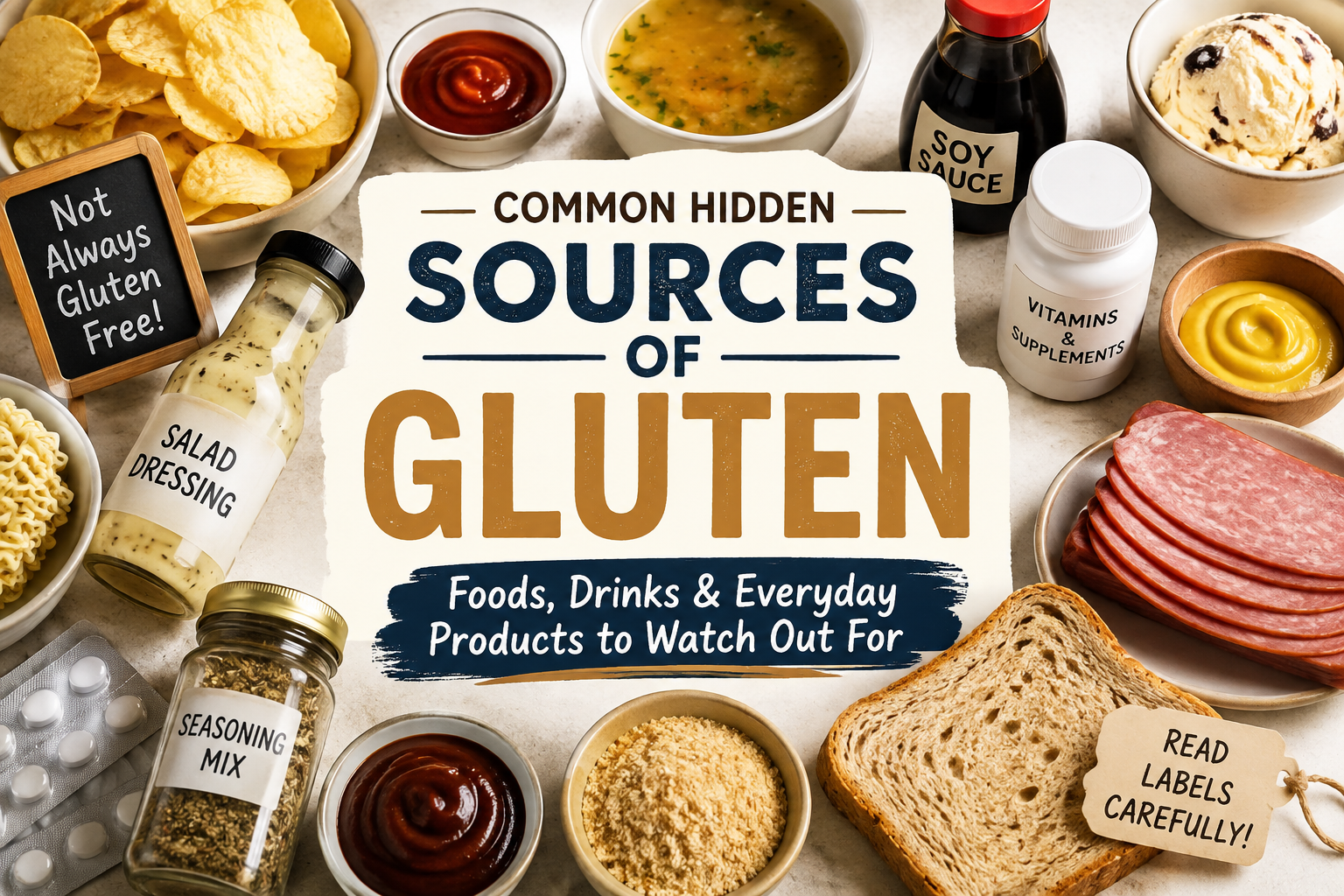
35 Hidden Sources of Gluten: Foods, Drinks & Everyday Products Most People Miss
If you’ve recently been diagnosed with coeliac disease, one of the biggest surprises you’ll probably face is discovering just how many everyday products can contain gluten.
Most people know that bread, pasta, cakes, biscuits, and pizza contain gluten. But what about soy sauce? Gravy? Potato chips? Vitamins? Lip balm? Even some medications?
The truth is that gluten can hide in hundreds of products you might never think to check.
For someone with coeliac disease, even tiny amounts of gluten can trigger an immune response that damages the small intestine. This damage can occur even if you don’t notice symptoms straight away, making it especially important to know where gluten hides.
The good news is that avoiding hidden gluten becomes much easier once you know what to look for. Learning how to read ingredient labels, identify risky foods, and avoid cross-contamination will soon become second nature.
In this guide, you’ll discover:
- The most common hidden sources of gluten
- Foods that often catch people by surprise
- Ingredients you should always check
- Everyday products that may contain gluten
- How to avoid accidental gluten exposure
- Practical shopping tips for beginners
Whether you’ve just been diagnosed or you’ve been living gluten free for years, this guide will help you make safer choices with confidence.
Table of Contents
- Why Hidden Gluten Is a Problem
- Foods That Often Contain Hidden Gluten
- Drinks That May Contain Gluten
- Everyday Household Products
- Medications and Supplements
- Cross-Contamination Risks
- Shopping Tips
- Frequently Asked Questions
- Quick Checklist
Why Is Hidden Gluten Such a Problem?
Unlike food allergies, where symptoms often appear immediately, coeliac disease is an autoimmune condition. Every time someone with coeliac disease eats gluten, their immune system attacks the lining of the small intestine.
Over time, this damages tiny finger-like projections called villi, which help absorb nutrients from food.
This means that even if you don’t feel sick after accidentally eating gluten, damage can still be occurring inside your body.
Hidden gluten is one of the biggest reasons people continue to experience symptoms after diagnosis.
Many foods that appear perfectly safe actually contain wheat, barley, rye, malt, or ingredients made from these grains.
Others become contaminated during manufacturing or food preparation.
Knowing where gluten hides is one of the most valuable skills you can learn after being diagnosed.
1. Soy Sauce
This surprises almost everyone.
Traditional soy sauce is made using both soybeans and wheat during fermentation, meaning most standard soy sauces are not gluten free.
Fortunately, many supermarkets now sell gluten-free tamari or specially made gluten-free soy sauce.
Beginner Tip
Always read the label, even if you’ve bought the brand before. Manufacturers sometimes change recipes.
2. Gravy Mixes
Instant gravy powders often use wheat flour as a thickener.
Many ready-made gravies served in cafés and restaurants also contain wheat.
If you’re cooking at home, choose products that are specifically labelled gluten free or make your own gravy using cornflour or another gluten-free thickener.
3. Stock Cubes and Stock Powders
Chicken, beef, and vegetable stock cubes frequently contain wheat-based ingredients, flavour enhancers, or thickeners.
They’re commonly used in:
- Soups
- Risottos
- Slow cooker meals
- Casseroles
- Sauces
Fortunately, many gluten-free stock options are now available.
4. Packet Soups
Instant soup mixes often contain wheat flour, barley, or malt extract to improve texture and flavour.
Even soups that seem naturally gluten free—such as pumpkin or tomato—may contain gluten if they’re made from a packet or concentrate.
Fresh homemade soup or certified gluten-free brands are often safer choices.
5. Ready-Made Sauces
Many bottled sauces rely on wheat flour or modified starches to create a thicker consistency.
Common examples include:
- Cheese sauce
- Mushroom sauce
- White sauce
- Pepper sauce
- Stir-fry sauces
- Pasta sauces
Never assume a sauce is gluten free just because it doesn’t contain bread or pasta.
6. Salad Dressings
Creamy dressings, vinaigrettes, and flavoured dressings can contain wheat-based thickeners or malt vinegar.
Always check products such as:
- Caesar dressing
- Ranch dressing
- Honey mustard dressing
- French dressing
- Thousand Island dressing
Making simple homemade dressings with olive oil, vinegar, herbs, and lemon juice is an easy way to avoid hidden gluten.
7. Marinades
Many meat marinades include soy sauce, malt vinegar, or wheat-based thickeners.
This applies to:
- Chicken marinades
- Beef marinades
- Pork marinades
- BBQ marinades
If you’re buying pre-marinated meat from a supermarket or butcher, always ask what’s in the marinade before purchasing.
8. Barbecue Sauce
BBQ sauce is another product that often surprises people.
Some brands use wheat flour or malt ingredients to improve flavour or consistency.
Because recipes vary widely between manufacturers, always read the label rather than assuming all barbecue sauces are the same.
9. Teriyaki Sauce
Traditional teriyaki sauce almost always contains soy sauce.
Since regular soy sauce usually contains wheat, teriyaki sauce is also commonly unsuitable for people with coeliac disease unless it is specifically labelled gluten free.
10. Worcestershire Sauce
Whether Worcestershire sauce is gluten free depends on the brand and the country where it’s made.
Some brands use malt vinegar or other gluten-containing ingredients, while others produce gluten-free versions.
If you’re unsure, choose a brand that clearly states it is gluten free.
11. Flavoured Potato Chips
Plain potato chips are often gluten free, but flavoured varieties may contain gluten through seasoning mixes, malt flavouring, or wheat-based additives.
Flavours that commonly require extra attention include:
- Barbecue
- Chicken
- Sour cream and chives
- Salt and vinegar
- Cheese flavours
Always check the packaging before buying.
12. Corn Chips
Many people assume all corn chips are safe because they’re made from corn.
However, flavoured varieties may contain wheat-based seasonings or be manufactured on equipment shared with gluten-containing products.
Look for products labelled gluten free if you have coeliac disease.
13. Flavoured Popcorn
Microwave popcorn and ready-to-eat flavoured popcorn sometimes contain seasoning blends with gluten-containing ingredients.
Caramel, cheese, and savoury flavours are worth checking carefully.
Plain popcorn kernels popped at home are naturally gluten free and make an easy snack.
14. Rice Crackers
Rice crackers are often chosen as a gluten-free alternative, but not all brands are safe.
Some varieties are flavoured with soy sauce or other seasonings that contain wheat.
Never assume a product is gluten free just because “rice” is in the name.
15. Processed Deli Meats
Fresh meat is naturally gluten free, but processed meats may contain gluten as a filler, binder, or flavouring.
Examples include:
- Ham
- Salami
- Mortadella
- Chicken slices
- Turkey slices
- Roast beef from the deli
If you’re buying sliced meats from a deli counter, ask whether they’re gluten free and whether the slicer is cleaned between products to reduce the risk of cross-contamination.
Coming Up in Part 2
In the next section, we’ll cover:
- Sausages
- Meatballs
- Burger patties
- Breakfast cereals
- Granola
- Oats
- Lollies and chocolate
- Ice cream
- Beer and alcohol
- Medications
- Vitamins
- Lip balm
- Communion wafers
- Pet food
- Plus many more hidden sources that most people never think about.
16. Sausages
Sausages may look like they’re made entirely from meat, but many varieties contain fillers, breadcrumbs, wheat flour, or cereal-based binders to improve texture and reduce costs.
Even premium sausages aren’t always gluten free.
Shopping Tip
Choose sausages that are clearly labelled gluten free, or ask your local butcher about the ingredients they use.
17. Burger Patties
Homemade burger patties made with plain mince, herbs, and spices are naturally gluten free. However, many pre-made patties contain:
- Breadcrumbs
- Wheat flour
- Seasoning mixes
- Soy sauce
Restaurant burgers may also use patties that contain gluten, so don’t assume removing the bun makes the meal safe.
18. Meatballs
Traditional meatballs often include breadcrumbs to help hold them together.
Frozen meatballs, supermarket deli meatballs, and restaurant versions commonly contain wheat unless specifically made gluten free.
Making your own with gluten-free breadcrumbs or crushed gluten-free crackers is an easy alternative.
19. Crumbed Chicken and Fish
This one may seem obvious, but it’s worth mentioning because “oven baked” or “lightly coated” products can sound healthier without making it clear that the coating contains gluten.
Watch out for:
- Chicken nuggets
- Chicken schnitzel
- Fish fingers
- Crumbed fish fillets
- Popcorn chicken
Even gluten-free crumbed products can become unsafe if cooked in the same fryer as foods containing gluten.
20. Breakfast Cereals
Breakfast cereals are one of the biggest sources of hidden gluten.
Many cereals contain:
- Wheat
- Barley malt extract
- Malt flavouring
- Wheat bran
Some cereals that appear healthy, such as bran flakes or high-fibre cereals, are made primarily from wheat.
Always look for cereals that are specifically labelled gluten free.
21. Granola and Muesli
Granola and muesli often contain wheat flakes, barley flakes, or oats that are not certified gluten free.
Even if the ingredients appear safe, cross-contamination during production is common.
Choose certified gluten-free granola if you enjoy it as part of your breakfast.
22. Oats
Oats deserve special attention because they’re one of the most confusing foods for people with coeliac disease.
Oats themselves do not naturally contain gluten, but they are often contaminated with wheat, barley, or rye during growing, harvesting, transport, or processing.
Some people with coeliac disease can eat certified gluten-free oats, while others may still react to a protein found in oats called avenin.
Speak with your doctor or dietitian before introducing oats into your diet.
23. Lollies and Sweets
Many lollies are gluten free, but not all.
Watch for:
- Liquorice
- Malted sweets
- Filled chocolates
- Wafer bars
- Chocolate-coated biscuits
- Chewy sweets containing wheat starch
Always check the ingredients list, especially on imported confectionery.
24. Chocolate
Plain chocolate is often gluten free, but many chocolate products contain ingredients such as:
- Biscuit pieces
- Cookie crumbs
- Wafer
- Malt flavouring
- Crisped wheat
Seasonal gift boxes and novelty chocolates may also be produced on shared equipment with gluten-containing products.
25. Ice Cream
Not all ice cream is created equal.
Products that commonly contain gluten include:
- Cookie dough ice cream
- Cookies and cream
- Cheesecake flavours
- Brownie flavours
- Waffle cone pieces
Even plain ice cream can become contaminated at ice cream shops if scoops are shared between flavours.
26. Flavoured Coffee Drinks
Plain coffee is naturally gluten free.
However, some flavoured coffee powders, instant café-style drinks, and café syrups may contain gluten-containing flavourings or additives.
If you’re unsure, ask the manufacturer or café staff.
27. Beer
Traditional beer is made using barley and is not suitable for people with coeliac disease.
Fortunately, there are now many gluten-free beers made from alternative grains or specially processed to remove gluten.
Always look for products clearly labelled gluten free.
28. Ready-to-Drink Alcoholic Beverages
Premixed alcoholic drinks, flavoured ciders, hard lemonades, and cocktails may contain gluten depending on the ingredients used.
Never assume a drink is safe based on its appearance.
Check the label or contact the manufacturer if you’re unsure.
29. Vitamins and Supplements
This is one of the hidden sources that surprises many people.
Some tablets and capsules use wheat starch as a filler or binder.
Before buying:
- Vitamins
- Fish oil
- Probiotics
- Herbal supplements
- Protein powders
check whether they’re suitable for a gluten-free diet.
Your pharmacist can often help if the label doesn’t provide enough information.
30. Prescription and Over-the-Counter Medicines
Some medicines contain inactive ingredients that may be derived from wheat.
This doesn’t mean you should stop taking prescribed medication.
Instead:
- Speak with your pharmacist.
- Ask your doctor if alternatives are available.
- Never stop medication without medical advice.
Most pharmacists can quickly check whether a medication is suitable for someone with coeliac disease.
31. Lip Balm and Lipstick
Although cosmetics are not eaten, lip products can be swallowed in small amounts throughout the day.
Some lipsticks, lip balms, and lip glosses contain ingredients derived from wheat.
If you have coeliac disease, it may be worth choosing products that are labelled gluten free or contacting the manufacturer for clarification.
32. Play Dough
Families with young children are often surprised to learn that traditional play dough usually contains wheat flour.
While it’s not intended to be eaten, children frequently put their hands near their mouths while playing.
If someone in your household has coeliac disease, consider using gluten-free play dough or making your own at home.
33. Pet Food
Pet food isn’t dangerous to your pet if it contains gluten, but it can present a risk for people with coeliac disease.
Dry dog food, cat biscuits, and bird seed mixes often contain wheat or barley.
Wash your hands after feeding pets, and avoid preparing your own food while handling pet food.
34. Communion Wafers
Traditional communion wafers are made from wheat.
If you attend church and have coeliac disease, speak with your minister or church leader. Many churches now offer gluten-free communion wafers or alternative arrangements.
35. Cross-Contaminated Foods
Sometimes the food itself doesn’t contain gluten, but it becomes contaminated during preparation.
Common examples include:
- Chips cooked in the same fryer as battered foods.
- Gluten-free toast made in a shared toaster.
- Gluten-free pizza cooked on the same surface as regular pizza.
- Shared butter, jam, or peanut butter containing bread crumbs.
- Chopping boards or knives used for both gluten-containing and gluten-free foods.
Cross-contamination is one of the most common reasons people continue to experience symptoms despite following a gluten-free diet.
The Hidden Ingredients You Should Learn to Spot
When reading food labels, become familiar with ingredients that indicate gluten may be present.
These include:
- Wheat
- Barley
- Rye
- Triticale
- Malt
- Malt extract
- Malt syrup
- Brewer’s yeast (when derived from barley)
If you see these ingredients, the product is generally not suitable unless it is specifically labelled gluten free.
Foods That Are Naturally Gluten Free
The good news is that many everyday foods are naturally gluten free and don’t need special substitutes.
These include:
- Fresh fruit
- Vegetables
- Plain meat
- Fresh fish
- Eggs
- Milk
- Cheese
- Plain yoghurt
- Rice
- Potatoes
- Corn
- Quinoa
- Buckwheat
- Lentils
- Chickpeas
- Beans
- Nuts
- Seeds
Building your meals around naturally gluten-free foods can make eating both healthier and simpler.
Coming Up in Part 3
In the final section, we’ll cover:
- A gluten-free shopping checklist.
- Tips for eating out safely.
- Common mistakes people make after diagnosis.
- Frequently asked questions.
- Key takeaways.
- Trusted resources and references.
- A printable “Hidden Sources of Gluten” checklist that readers can save or print.
Gluten-Free Shopping Checklist
Shopping for the first few weeks after a coeliac disease diagnosis can feel overwhelming. The good news is that once you learn what to look for, grocery shopping becomes much easier.
Use this checklist every time you shop:
✔ Read Every Ingredients List
Even if you’ve bought the product before, recipes can change without notice.
✔ Look for a Gluten-Free Label
Products labelled “gluten free” have been made to meet specific standards in many countries and are generally the safest option for people with coeliac disease.
✔ Watch for Hidden Ingredients
Always check for:
- Wheat
- Barley
- Rye
- Malt
- Malt extract
- Malt vinegar
- Brewer’s yeast (unless confirmed gluten free)
✔ Check “May Contain” Statements
Some manufacturers include warnings such as:
- May contain wheat
- May contain gluten
- Made in a factory that also processes wheat
These statements indicate there is a risk of cross-contamination. If you have coeliac disease, it’s generally safest to choose products without these warnings whenever possible.
✔ Build Your Meals Around Naturally Gluten-Free Foods
Fresh foods are often the safest and healthiest choice.
Fill your trolley with:
- Fruit
- Vegetables
- Fresh meat
- Fish
- Eggs
- Rice
- Potatoes
- Corn
- Legumes
- Nuts
- Seeds
The fewer processed foods you rely on, the easier it becomes to avoid hidden gluten.
Tips for Eating Out Safely
Dining out can feel intimidating at first, but it doesn’t have to be.
Here are a few ways to reduce the risk of accidental gluten exposure:
Tell the Staff You Have Coeliac Disease
Explain that you need to avoid gluten because of a medical condition—not simply as a dietary preference. This helps staff understand the importance of preventing cross-contamination.
Ask Questions
Don’t hesitate to ask:
- Is this sauce gluten free?
- Is the meat marinated?
- Are chips cooked in a shared fryer?
- Is gluten-free bread toasted separately?
- Can the chef prepare my meal using clean utensils?
Most restaurants appreciate clear communication and are happy to help.
Choose Simple Meals
Meals made from naturally gluten-free ingredients are often the safest choice, such as:
- Grilled meat or fish
- Steamed vegetables
- Rice
- Baked potatoes
- Salads (without croutons or questionable dressings)
Plan Ahead
Many restaurants now publish allergen information online. Checking the menu before you arrive can make ordering much easier.
Common Mistakes People Make After Diagnosis
Almost everyone makes a few mistakes while adjusting to a gluten-free lifestyle. Here are some of the most common—and how to avoid them.
Assuming a Food Is Gluten Free
Just because a product looks healthy or is made with rice, corn, or potatoes doesn’t mean it’s gluten free. Always read the ingredients list.
Forgetting About Cross-Contamination
A naturally gluten-free meal can become unsafe if it’s prepared on the same surface or with the same utensils as gluten-containing foods.
Trusting “Wheat Free” Labels
“Wheat free” does not necessarily mean gluten free. A product may still contain barley or rye.
Not Reading Labels Every Time
Manufacturers can change ingredients without warning. Get into the habit of checking every purchase.
Feeling Embarrassed to Ask Questions
Whether you’re eating at a restaurant or visiting friends, don’t feel guilty about asking how food has been prepared. Protecting your health is always worthwhile.
Frequently Asked Questions
Can a tiny amount of gluten really cause harm?
Yes. Even small amounts of gluten can trigger an immune response in people with coeliac disease. You may not notice symptoms, but intestinal damage can still occur.
Is “May Contain Gluten” Safe?
If you have coeliac disease, it’s usually best to avoid products carrying “may contain gluten” or similar precautionary statements, as they indicate a risk of cross-contamination.
Are Gluten-Free Products Always Healthier?
Not necessarily. Gluten-free biscuits, cakes, and snacks can still be high in sugar, salt, and fat. A healthy gluten-free diet should include plenty of naturally gluten-free whole foods.
Can I Eat Oats?
Some people with coeliac disease can tolerate certified gluten-free oats, while others cannot. Speak with your doctor or dietitian before introducing oats into your diet.
Are All Medications Gluten Free?
No. Some medicines and supplements contain wheat-derived ingredients. If you’re unsure, ask your pharmacist to check.
Will I Ever Stop Checking Labels?
Eventually, yes—but not because labels become less important. You’ll become familiar with the brands and products you trust, making shopping much quicker over time. It’s still a good idea to check labels regularly because recipes can change.
Quick Hidden Gluten Checklist
Before buying or eating something, ask yourself:
✅ Have I checked the ingredients list?
✅ Does it contain wheat, barley, rye, or malt?
✅ Is it labelled gluten free?
✅ Could it have been cross-contaminated?
✅ If I’m unsure, can I choose a safer alternative?
If you answer “no” to any of these questions, take another look before eating.
Key Takeaways
Hidden gluten can appear in places you’d never expect, from sauces and seasonings to medications and lip balm.
The most important things to remember are:
- Read every ingredients list.
- Learn the names of gluten-containing ingredients.
- Build meals around naturally gluten-free foods.
- Prevent cross-contamination at home and when eating out.
- Don’t be afraid to ask questions.
- When in doubt, leave it out.
With time, avoiding hidden gluten becomes second nature, and shopping and dining out become much easier.
Final Thoughts
Starting a gluten-free diet can feel like a huge adjustment, especially in the weeks after a coeliac disease diagnosis. It’s completely normal to feel overwhelmed by ingredient lists, unfamiliar products, and concerns about accidentally eating gluten.
The good news is that every shopping trip, every meal you prepare, and every label you read builds your confidence. Before long, you’ll know which brands you trust, where gluten is most likely to hide, and how to make safe choices without feeling stressed.
Remember, perfection isn’t expected overnight. Focus on learning a little at a time, ask questions when you’re unsure, and rely on trusted resources for guidance. Living gluten free may require a few extra steps, but with the right knowledge and preparation, it quickly becomes part of your everyday routine.
Related Guides
Foods You Can Eat With Coeliac Disease: Complete Gluten-Free Food List
Foods to Avoid With Coeliac Disease: Complete Gluten-Free Guide
Eating Out With Coeliac Disease: How to Stay Gluten Free at Restaurants
How to Read Gluten-Free Food Labels: A Beginner’s Guide
How to Avoid Gluten Cross-Contamination With Coeliac Disease
The Ultimate Gluten-Free Shopping Guide
How to Get Diagnosed With Coeliac Disease: Symptoms, Testing & Where to Get Help
Trusted Resources
For more information about coeliac disease and living gluten free, visit these trusted organisations:
- Coeliac New Zealand – https://coeliac.org.nz
- Health New Zealand | Te Whatu Ora – https://www.tewhatuora.govt.nz
- Coeliac Australia – https://www.coeliac.org.au
- Coeliac UK – https://www.coeliac.org.uk
- Celiac Disease Foundation (USA) – https://celiac.org
- Beyond Celiac (USA) – https://www.beyondceliac.org
- Canadian Celiac Association – https://www.celiac.ca
Medical Disclaimer
This article is intended for general educational purposes only and should not be used as medical advice. If you have coeliac disease or think you may have it, speak with your doctor or an accredited dietitian for personalised advice.
Leave a Reply
You must be logged in to post a comment.